
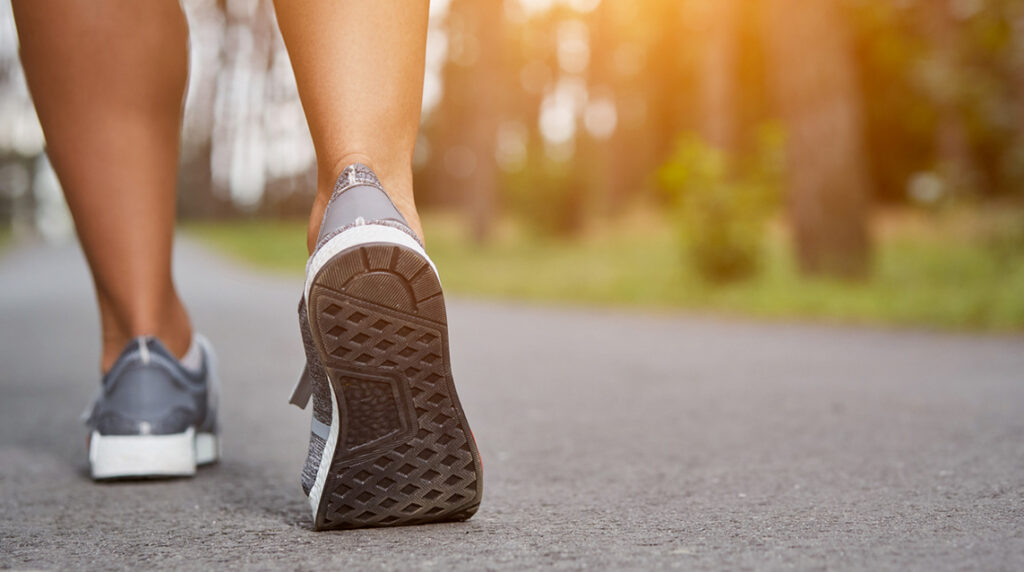

Picture this: you’re itching to go on a run, but all you have are walking shoes. Did you know that running in walking shoes can result in injury? Though they may look similar, walking and running shoes are each optimized for their respective activities. Using one in place of the other (especially walking shoes in place of running shoes) can cause unnecessary strain on joints and muscles.
The walking vs. running shoes debate reveals a simple fact: not all shoes are created equally. So, how can you choose the right pair for your needs? Let’s take a closer look.
Can You Use Running Shoes for Walking?
Running shoes can be used for walking, though it isn’t always ideal. Walking shoes are optimized for more controlled movements, while running shoes provide cushioning for more high-impact ones. This means that running shoes offer benefits like shock absorption, which can provide extra comfort when walking.
Not all running shoes are created equally, though; some shoes, like high-performance running shoes, are designed specifically for running. Walk on the safe side: be sure to check the specifics of your running shoes before walking in them.
What about using walking shoes for running?
Again, it is possible to use walking shoes for running, but it’s not recommended. That’s because walking shoes don’t typically offer the flexibility, cushioning, and spring you need to run comfortably.
They may also be too thin to properly protect your feet from the elements, depending on the type of running you’re doing and the style of shoe you select.
So, What is the Difference Between Walking and Running Shoes?
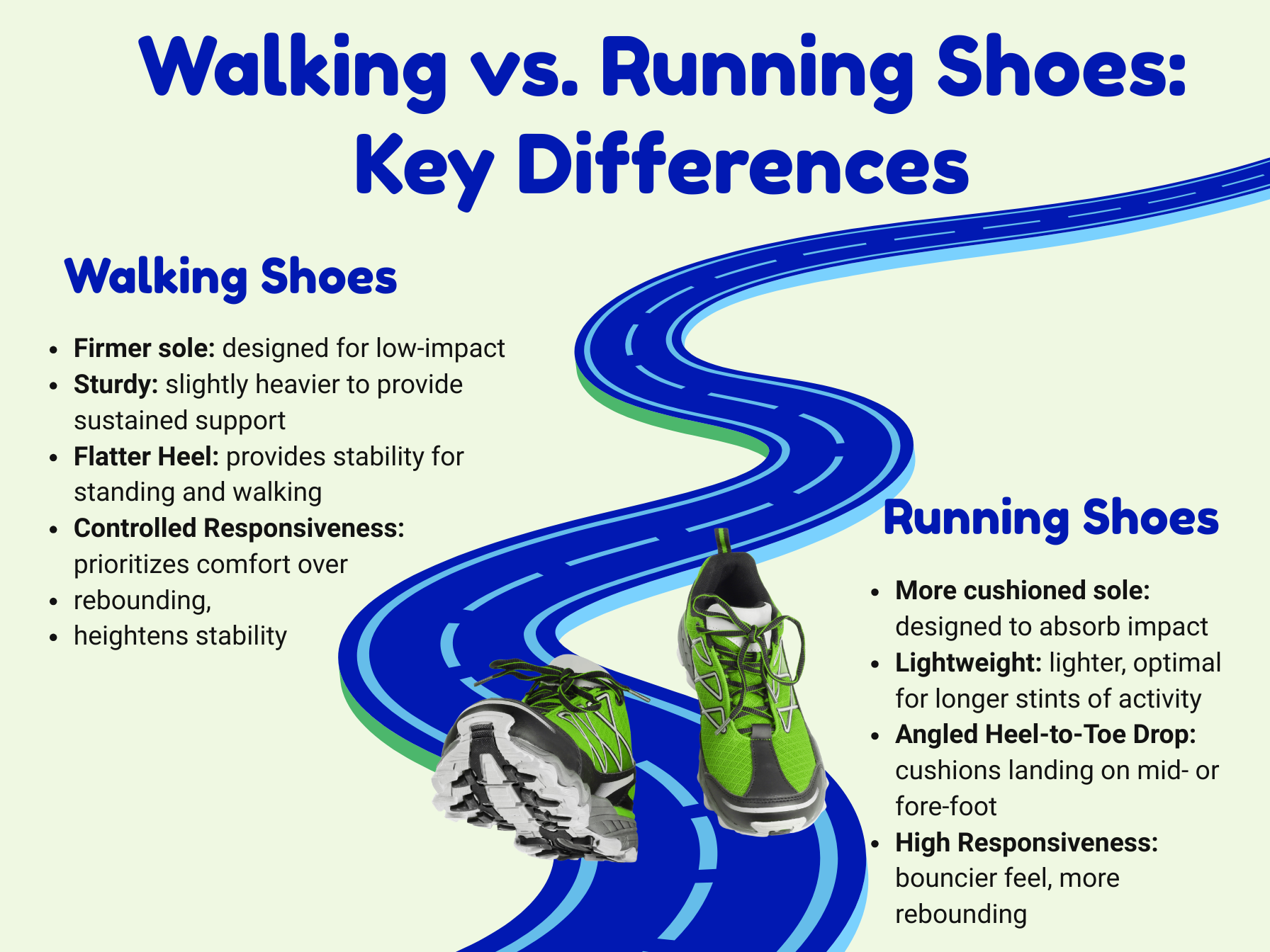
The main difference between walking and running shoes is their weight, height, and firmness. Generally speaking, running shoes are springier and lightweight, allowing you to move swiftly without placing undue stress on your joints. Walking shoes, on the other hand, are firmer and optimized for stability.
Here are a few key differences between running and walking shoes to help you find the right fit:
Choosing the Right Shoes for Your Needs
Are you looking for something to support you through long stints on your feet? If so, walking shoes are likely the best fit for you. Their supportive, sturdy, and stable design is optimal for longer-term standing or walking. They are especially great for people with high arches or flat feet.
Looking for something that’ll carry you through an active lifestyle? If so, running shoes may be your best option. Running shoes are lighter, offer additional cushioning, and provide high responsiveness, making them optimal for high-impact activities.
Running Shoes and Walking Shoes to Consider
You’ve narrowed down your ideal shoe type, and now it’s time to look for options. With so many to choose from, shoe shopping can be overwhelming. To help you out, we’ve rounded up a few of our favorite running and walking shoe options.
Running Shoes to Try:
- Hoka Rincon 4 ($125)
- New Balance Fresh Foam X 1080V ($169)
- Brooks Glycerin 23 ($175)
Walking Shoes to Try:
- On Cloudsurfer 2 Road ($160)
- Hoka Bondi SR ($180)
- On Cloud 6 Waterproof ($180)
Need to Get Rid of Extra Walking or Running Shoes?
Sneakers4Good’s mail-in reuse bag program has you covered. All you have to do is request a free mail-in bag, fill it with 6-8 pairs of your gently worn, used and new sneakers, and then ship it back to us. The process is completely free; Sneakers4Good covers the shipping. All in all, the mail-in reuse bag program is a small way for your old sneakers to make a big difference.
Choose a Shoe That Fits Your Needs
Running and walking are most enjoyable when you’re properly prepared, and knowing the difference between running and walking shoes can help ensure that you are. Whether you’re planning to upgrade your shoe game or simply reshape your existing collection, Sneakers4Good’s mail-in reuse program is a great way to give your old shoes a new life.
© 2026 Sneakers4Good. All Rights Reserved.