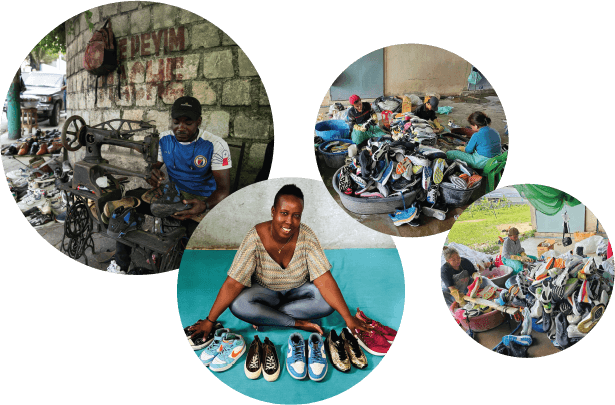
Reverse logistics doesn’t have to be a problem for footwear brands, retail stores, and manufacturers. In fact, it can become a strategic advantage that gets inventory off your hands responsibly, reduces waste, and makes a global social impact.
For over a decade, Sneakers4Good has led efforts with thousands of partners in the U.S. and worldwide to redirect athletic shoes into the reuse economy through reverse logistics.
Our SYstem Works FOr:
SAMPLES
OVERSTOCK
RETURNS
MISMATES
END-OF-SEASON
FACTORY DEFECTS
We ensure the footwear doesn’t sit in warehouses or end up in landfills. We also ensure that they don’t flood secondary resale markets, sell the merchandise on eBay, or compete in the U.S. marketspace.
A Smarter Way to Handle Returns and Samples
Traditional reverse logistics carries risks, including brand dilution, channel conflict, and gray-market exposure. Sneakers4Good takes full ownership and control of the process from collection through final reuse marketing, without competing with U.S. markets or reselling online.
We buy your qualifying inventory and redirect it through ethical and verifiable distribution channels worldwide. In turn, the footwear becomes inventory for micro-entrepreneurs to create and expand their own work opportunities in developing nations.
Reach out via the form below Courtney Eaton Chief Procurement Officer | Reverse Logistics
BRAND PROTECTION
We’ve built our reverse logistics model for scale and trust. So, whether you’ve got 50 samples or 50,000 returns, you get an agreement, transparent reporting, and verifiable ESG and CSR outcomes. To date, we’ve shipped more than 37 million pairs of shoes and sneakers.
With Sneakers4Good, you can rest assured that the reverse logistics are done responsibly and with fewer headaches for your team. Moreover, you can choose to direct the funds we pay you to reinvest in your business or to a social cause of your choice.
Let’s move forward with ethical reverse logistics in a trusted partnership.
SMART. SIMPLE. SUSTAINABLE.
When you partner with Sneakers4Good, not only are you being socially responsible and helping to keep sneakers out of landfills, but you provide innovative opportunities to families in developing countries all over the world through micro-enterprise.