
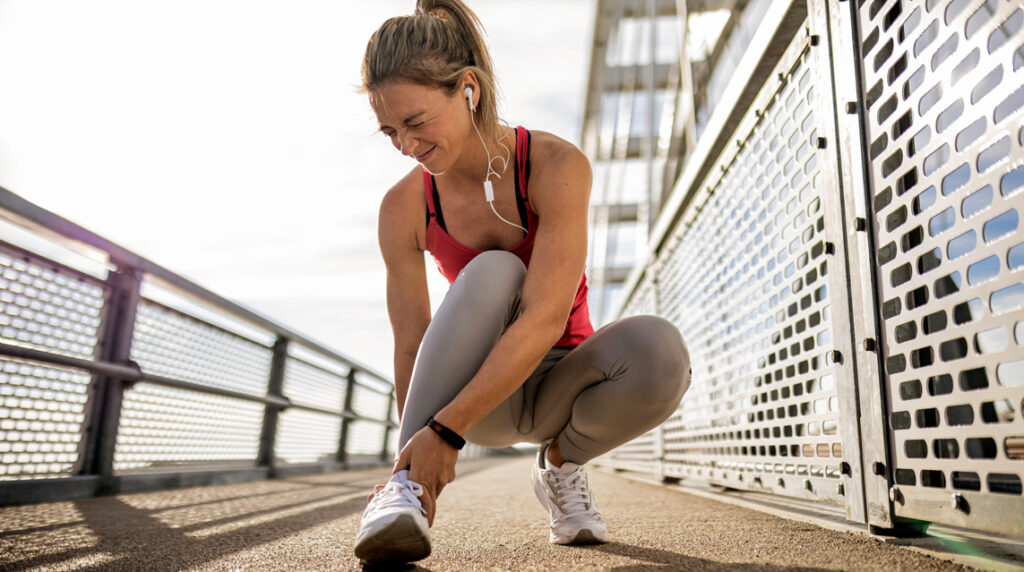

Foot pain and running injuries don’t just slow you down—they can derail your entire fitness routine. Whether you’re dealing with plantar fasciitis, knee pain, or persistent shin splints, choosing the right running shoes can make a real difference. No shoe can replace proper training, injury rehab, or medical care. Still, research-backed footwear designed for specific foot mechanics can reduce strain, improve comfort, and help you stay consistent.
Below, we break down the best running shoes for common foot pain and injuries. In turn, you can find the right support for the miles ahead.
Can the Right Shoes Really Make a Difference?
Before we dive in, a quick note on foot pain and running shoes: while the right running shoes can significantly reduce discomfort and help manage common foot and joint issues, no shoe is a medical cure. Foot shape, running gait, training volume, and your personal injury history all play a role.
The recommendations below consist of shoe brands and models that are commonly recommended by podiatrists, physical therapists, and experienced runners for these conditions. However, as with any piece of essential running equipment, individual experiences and results will vary. It’s important to find the shoe that best fits your individual needs and training style to achieve the best results.
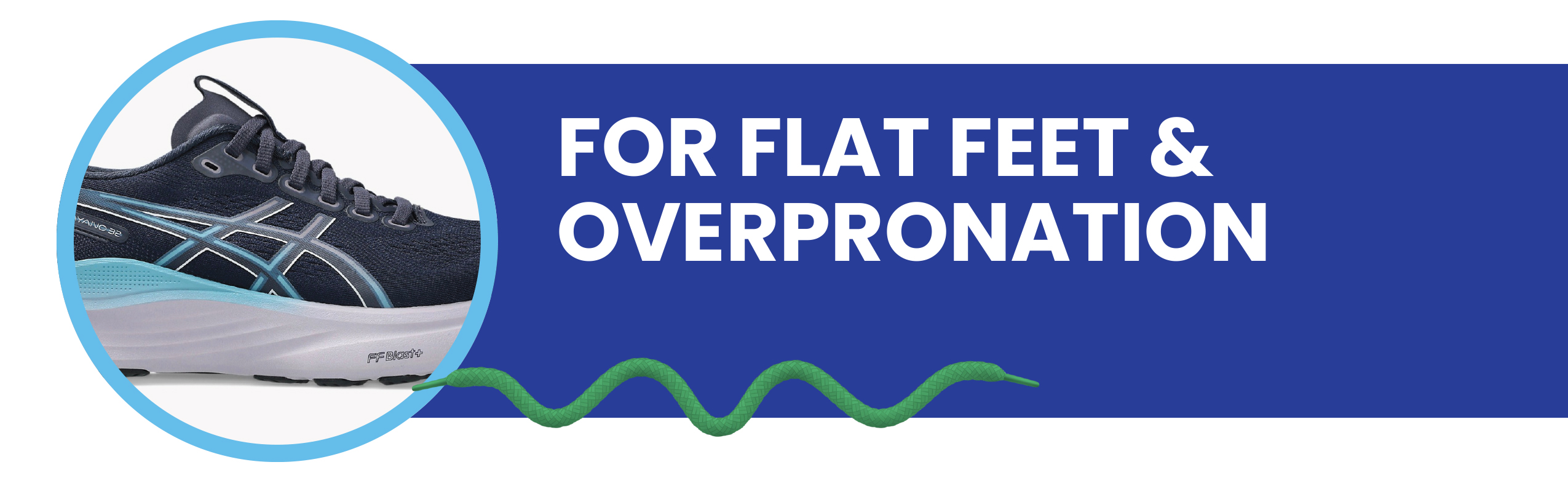
Best Running Shoes for Flat Feet & Overpronation
Runners with flat feet or overpronation will often benefit from shoes that provide structured support and help guide the foot through a more stable stride. These models are frequently recommended for their balance of cushioning and stability, which may reduce strain on the arches, ankles, and knees.
ASICS Gel-Kayano
Known for its structured stability, the ASICS Gel-Kayano offers a combination of medial support and shock absorption. Runners who overpronate often appreciate how the Kayano provides guidance through the gait cycle while still feeling cushioned underfoot. It’s frequently recommended for runners seeking stability without sacrificing comfort.
Brooks Adrenaline GTS
This shoe is a popular choice for runners with flat feet or overpronation because of its GuideRails® support system. Rather than forcing the foot into an unnatural position, the shoe helps limit excessive inward movement while still allowing a natural stride.
HOKA Arahi
The HOKA Arahi uses a lightweight stability system that provides support without the bulk of traditional motion-control shoes. Its wide base and cushioned midsole help create a stable platform, which may reduce strain for runners with flatter arches or moderate overpronation.

Best Running Shoes for Plantar Fasciitis & Heel Pain
For plantar fasciitis, cushioning and arch support matter more than aggressive motion control. Many runners find relief in well-cushioned daily trainers that help absorb impact and reduce stress on the plantar fascia—especially during long shifts or high-mileage weeks.
HOKA Bondi
The HOKA Bondi is among the most cushioned road shoes on the market, making it a popular choice for runners struggling with heel discomfort. Its thick midsole helps absorb impact, which may reduce stress on the plantar fascia during long runs or extended periods on hard surfaces.
Brooks Ghost
With a smooth, neutral ride and consistent cushioning, the Brooks Ghost is often recommended for runners looking to manage plantar fasciitis symptoms. The shoe’s shock absorption and stable heel design can help reduce the repetitive impact that contributes to heel pain.
ASICS Gel-Nimbus
The Gel-Nimbus is built for comfort first, offering plush cushioning and a soft heel landing. Runners who experience plantar fascia irritation may appreciate how the shoe disperses impact forces more evenly across the foot.
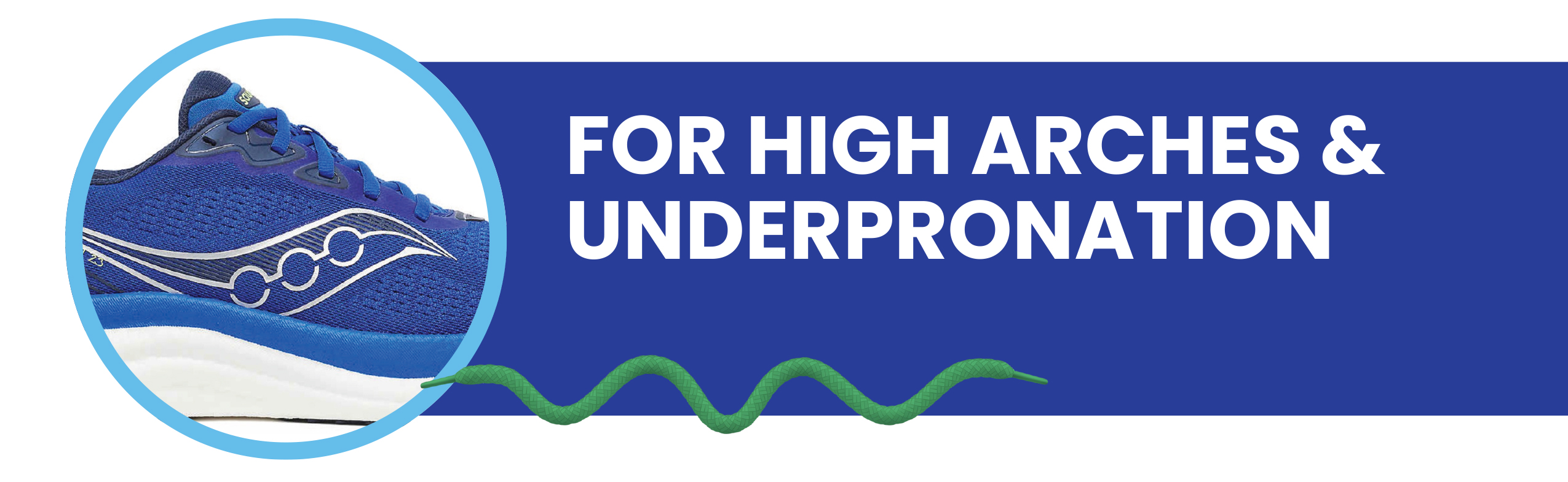
Best Running Shoes for High Arches & Underpronation
High-arched runners tend to absorb less shock naturally, which can increase impact stress. Shoes with generous cushioning and neutral platforms are often recommended to help disperse force more evenly across the foot.
HOKA Clifton
The HOKA Clifton combines lightweight construction with ample cushioning, making it a strong option for runners with high arches. Its smooth ride and shock-absorbing design can help reduce impact stress without feeling overly soft or unstable.
Saucony Triumph
Runners with high arches often benefit from extra cushioning, and the Saucony Triumph delivers exactly that with a soft (yet responsive) midsole. The neutral platform allows the foot to move naturally while helping absorb impact that high arches may otherwise struggle to handle.
Nike Pegasus
A long-standing favorite among neutral runners, the popular Nike Pegasus offers a balanced blend of cushioning and responsiveness. High-arched runners often find it comfortable for daily training thanks to its adaptable fit and shock absorption.
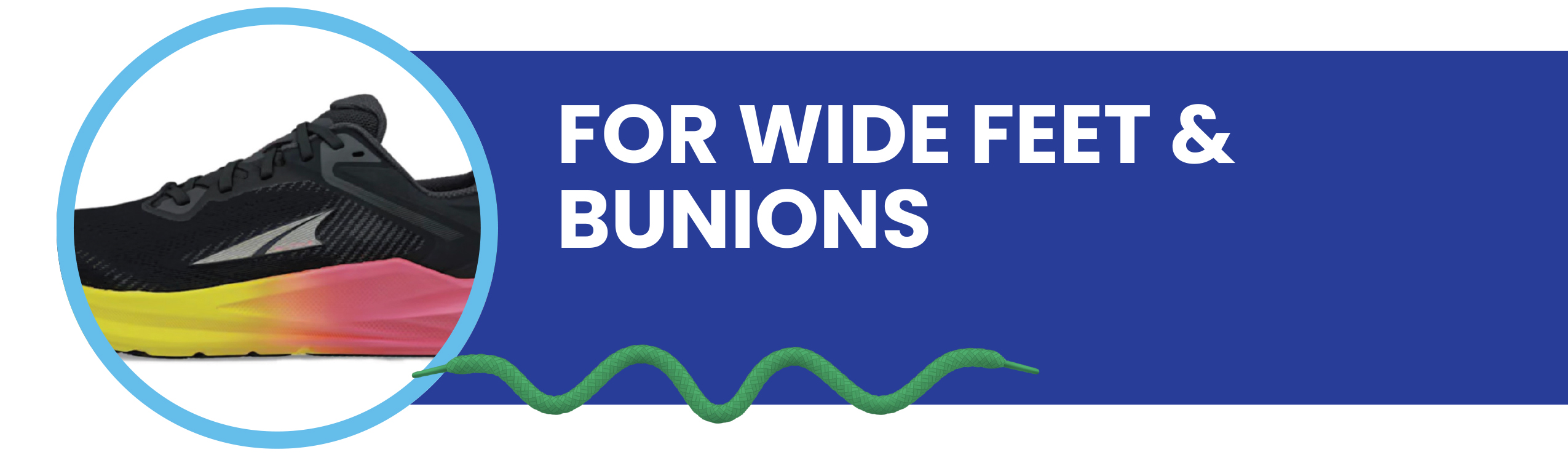
Best Running Shoes for Wide Feet & Bunions
Shoes designed for wide feet or bunions don’t “fix” foot structure, but a roomier toe box and flexible upper can reduce pressure points and friction that contribute to pain over time.
Altra Torin
The Altra Torin is known for its FootShape™ toe box, which allows toes to spread naturally. This extra room can help reduce pressure on bunions and sensitive areas, especially during longer runs or extended wear.
New Balance Fresh Foam 1080 (Wide)
Available in multiple widths, the Fresh Foam 1080 offers plush cushioning and a more accommodating fit. Runners with wide feet or bunions often appreciate the combination of space and softness, which helps minimize friction and hot spots.
Topo Athletic Phantom
Topo shoes are designed with a roomy toe box and a secure midfoot, offering a balance of comfort and structure. The Phantom works well for runners who want more space up front without giving up a traditional running shoe feel.
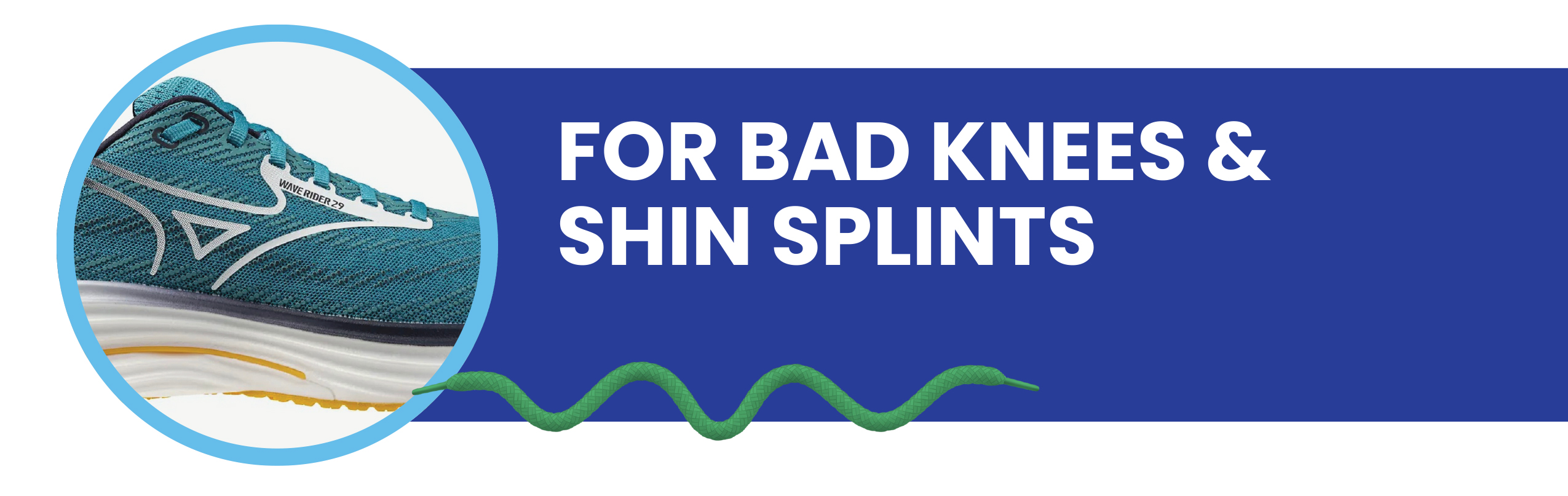
Best Running Shoes for Bad Knees & Shin Splints
Shin splints and knee pain can be influenced by a number of factors, including impact forces, training load, and running mechanics. Shoes with good shock absorption and stable platforms may help reduce stress, particularly for runners logging higher mileage or running on hard surfaces.
Mizuno Wave Rider
The Wave Rider line offers balanced cushioning, a stable ride, and a responsive feel. The signature Wave plate helps distribute impact forces more evenly, reducing shock to the knees and lower legs during repetitive strides.
Nike React Infinity Run
Designed with extra foam underfoot and a slightly wider platform, the React Infinity Run is built to reduce injury-related discomfort. Many runners report less knee irritation and shin stress thanks to its soft yet supportive React foam and engineered mesh upper.
New Balance Fresh Foam X More v4
This is a max-cushion neutral trainer with a highly forgiving midsole. The Fresh Foam X cushioning absorbs impact forces—ideal for runners who want extra underfoot protection without sacrificing comfort or stability.
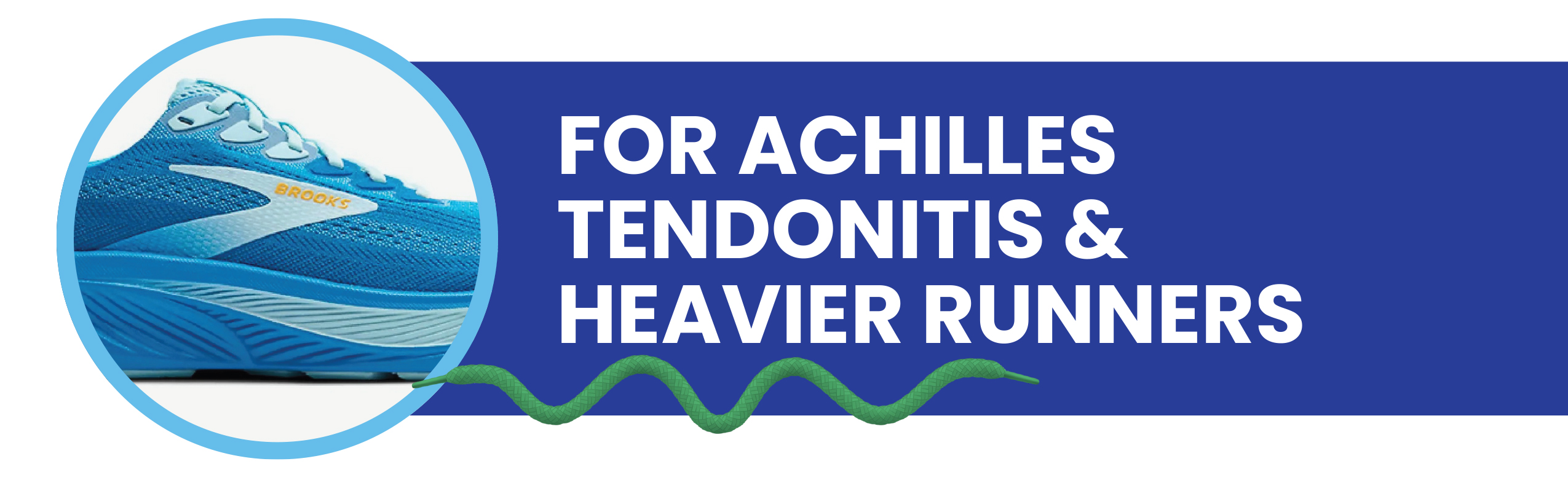
Best Running Shoes for Achilles Tendonitis & Heavier Runners
Achilles tendonitis is a highly individual issue. Some runners benefit from slightly higher heel-to-toe drops that reduce strain on the tendon, while others require gait retraining or physical therapy. The following shoes are commonly chosen for their cushioning and geometry, but they’re best viewed as supportive tools rather than standalone solutions.
Saucony Ride
The Saucony Ride offers a stable, neutral platform with consistent cushioning throughout the midsole. Its predictable feel makes it a solid option for runners easing back into training while managing persistent Achilles discomfort.
ASICS Gel-Cumulus
The Gel-Cumulus provides responsive cushioning and a slightly elevated heel, which some runners find more comfortable when managing Achilles sensitivity. It’s a versatile daily trainer that doesn’t feel overly aggressive.
Brooks Ghost
With a moderate heel-to-toe drop and balanced cushioning, the Brooks Ghost gets frequently chosen by runners seeking to reduce strain on the Achilles tendon. Its geometry allows for a natural stride while avoiding excessive stress on the heel cord.
Need to Get Rid of Worn Running Shoes?
Once you’ve upgraded to running shoes that better support your feet, don’t let your gently worn, used or new pairs end up in landfills. Sneakers4Good offers a free sneaker reuse program that gives sneakers a second life.
Runners, gyms, and athletic organizations can host a sneaker collection drive that:
- Keeps running shoes out of landfills
- Supports the reuse economy
- Creates local and global impact
- Help partners earn money for a favorite cause
It’s a simple way to double your impact—supporting your health while helping communities thrive!
Final Strides: Choosing Running Shoes That Work With Your Body
Ultimately, the best running shoe is one that supports your foot, your stride, and your training needs. Trying on multiple models, rotating sneakers, and listening to early warning signs of discomfort can make just as much difference as the brand you choose.
Foot pain doesn’t mean running is off the table—sometimes it simply means your running shoes need to work smarter. By choosing running shoes designed for your specific foot type or injury risk, you can reduce discomfort, improve efficiency, and keep doing what you love.
And when it’s time to move on from a worn pair, remember: your running shoes still have value! Give them a second life through a Sneakers4Good sneaker collection drive and turn worn miles into meaningful impact. Learn how to get started today.
© 2026 Sneakers4Good. All Rights Reserved.