

For many entrepreneurs and athletes, looking to open a gym is a career goal. It’s the idea of helping people progress on their fitness journeys with carefully planned programs and education about the benefits of exercise that they love.
Like any business, opening a gym requires many different financial and legal steps. You’ll need to carefully plan a budget and pinpoint specific goals for your business. To remain compliant with the law, you’ll also need to obtain the necessary licenses and permits to open your gym.
While this process can seem overwhelming, it doesn’t have to be. These steps can help you stay organized and check requirements off your list as you move closer to your grand opening:
- Find your competitive edge.
- Write your business plan.
- Fulfill legal requirements.
- Develop a budget.
- Choose a location.
- Advertise your gym.
Opening your own business allows you to occupy a specific niche, like opening a CrossFit gym or pilates studio. But finding your niche starts with deciding what will make your gym stand out. Let’s get started by walking through how you can find your competitive edge.

1. Find your competitive edge.
The first step to finding your niche is understanding what other gyms in your area have to offer and how you can stand out. It can look different depending on geographic location, target audience, and your existing experience with different areas of fitness. For instance, if you have 10 years of experience as a yoga instructor, it would be best to lean into that expertise and open a yoga studio.
In addition to focusing on a specific area you have extensive knowledge of, here are a few other ideas to help you get started:
- Organize your gym around a specific activity like strength training, pilates, or boxing.
- Choose a unique theme or aesthetic for your gym’s name and brand (e.g., the great outdoors).
- Offer exclusive benefits and perks like nutrition classes and custom training regimens like coaching for a marathon.
When choosing your gym’s unique, defining factor, ensure this aspect of your business is easy to market so prospective customers will understand what you’re offering them. To test this, summarize what sets you apart in one clear, succinct sentence. Once you’ve concentrated your offerings into this single sentence, you can create marketing messages that clearly communicate the benefits of a membership at your gym to customers.
2. Write your business plan.
There is more to running a business than just having a unique idea, and a thorough plan that considers granular details is crucial. Once you know what to center your business around based on your goals, you’ll need to develop a comprehensive business plan.
A business plan is a written document explaining your business, its goals, and how you will achieve them. The parts of a business plan can change depending on whether you are aiming to recruit investors and how detailed you want your project to be, but here are some of the main components to incorporate:
-
Executive summary.
Think of this section as your gym’s five-minute elevator pitch. Outline what your business is as well as the specific products and services it will offer. You should also include details like your location and mission statement here.
-
Business or company description.
In this section, go into more detail about the problems your business will address and the specific consumers you plan to serve. You should also name any competitive advantages that will give your gym a leg up on others in your area.
-
Market analysis.
To position your business within the context of your market, perform a strengths, weaknesses, opportunities, and threats (SWOT) analysis. Research the competitors near you, including other gyms, nutrition shops, and running stores.
-
Marketing strategy.
Explore how you will attract and retain customers at your gym through marketing and advertising campaigns. Elaborate on the specific channels you will reach prospective customers through, how you will brand your gym, and which messaging tactics you’ll use.
-
Financial plan.
Calculate how much funding you’ll need to start and attach any existing financial statements and analyses. Make sure to consider the costs associated with running a business, like securing legal licenses, purchasing equipment, payroll, covering monthly expenses, and maintaining facilities.
A fleshed-out business plan is a great way to stay on track, keep ideas and goals organized, and build a source of truth to refer back to while getting your gym up and running. It can also help you secure additional funding from investors by clearly laying out your financial needs, explaining why your business will succeed, and outlining your long-term goals.
3. Fulfill legal requirements.
Like any responsible business owner, you know that remaining compliant with the law is critically important to opening a gym. Legal compliance protects your customers’ and staff members’ safety and ensures your business practices and moral and transparent.
While essential, understanding, meeting, and maintaining legal compliance can be complicated. Because obtaining the proper licenses and permits to meet regulatory requirements can take a long time, it’s essential to kick off these processes as soon as possible. While legal requirements to open a business vary greatly from state to state, the most common requirements include:
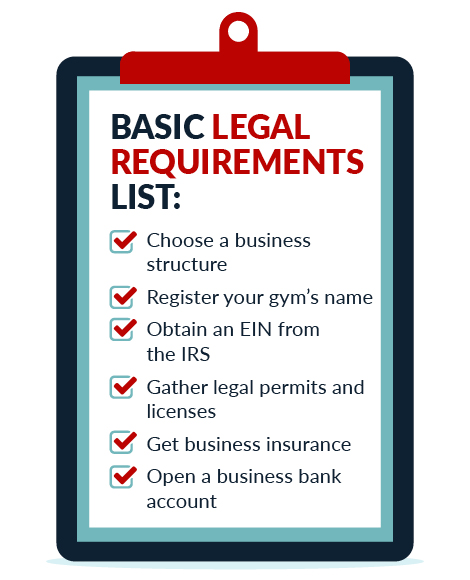
- Choosing a business structure (e.g., sole proprietor or LLC)
- Registering your gym’s name
- Obtaining an employer identification number (EIN) from the IRS
- Gathering relevant legal permits and licenses
- Getting business insurance
- Opening a bank account for your business
The most critical license you need to obtain before opening is a standard business license or a permit from your state or local government that permits you to open and operate a business. Be sure to check with local regulations to learn more about your state’s process for procuring a license.
You may also need additional permits depending on the services, products, and other offerings your gym will have. For example, if you plan to sell nutritious post-workout snacks and smoothies, you’ll need to get a food vendor’s license and pass a health inspection before opening. Again, these rules can vary depending on your location, so referencing state laws and consulting with a lawyer can help you check off every crucial legal requirement.
4. Develop a budget.
While you should have an overview of your general financial situation in your business plan, it’s also essential to develop a detailed budget that tracks every expenditure and revenue stream. With a comprehensive budget and diligent financial data-tracking, you can create detailed monthly reports that show your progress towards goals, highlight opportunities to maximize revenue, and reveal areas where you can responsibly cut costs.
Staying on top of your budget and financial records can also help during tax season once your business is off the ground. Using your monthly reports, you can set aside funds throughout the year to ensure you have the cash on hand to pay taxes. You should also keep track of costs like capital assets (such as furniture and equipment) or travel expenses to prove your tax deductions to the IRS.
To get started with creating your budget, follow these steps:
-
Calculate your fixed costs.
Add up recurring monthly expenses like rent, supplies, salaries, loans, and insurance payments.
-
Determine your variable costs.
Calculate your total variable costs by adding expenses that are subject to change from month to month, like utilities, together.
-
Calculate your monthly revenue.
If you haven’t opened your gym yet, determine how much you’ll need to bring in each month to reach your desired profit margin. That can inform the prices you set for each membership.
Remember to set aside a contingency or emergency fund you can access if an unexpected cost arises. Let’s say your roof develops a leak, and you need to fix it quickly to prevent additional damage to your floor and equipment. Keeping some extra funds on hand can help you prepare for and address these unexpected expenses to limit fear and anxiety around them. Remember that these funds should be liquid and easy to access so you can use them anytime without compromising other parts of your business.
As you’re getting started, you may need to think of creative ways to diversify your revenue streams to offset the expenses of starting a new business. A running shoe recycling program is an easy way to add a new revenue stream and make more room in your budget. To get started, partner with a social enterprise like Sneakers4Good, collect running shoes from your customers using provided collection materials, send them to your partner, and receive a check from them after the sneakers are processed.
5. Choose a location.
Location can be everything for your business if you want to appeal to a specific demographic or customer base. You’ll likely invest a lot of time, effort, and money into personalizing your gym. Commercial leases typically last three to five years, so it’s important that you choose a space you’re comfortable staying in for at least that long. Make sure to factor in planned growth when choosing a space—while a 10-car parking lot may suit your needs now, what about two years from now when you’ve hired five full-time employees and doubled your client base?
One of the most important things to consider when selecting a location is your proximity to your target customers. Is your gym located near where they live? Is your space easily accessible to these customers? Let’s say you are opening a barre studio in a college town, and your primary demographic is female college students. In this scenario, the optimal location would be a space within walking distance of the college campus and downtown apartments, so it is easy for students to make their way to your gym between or after classes.
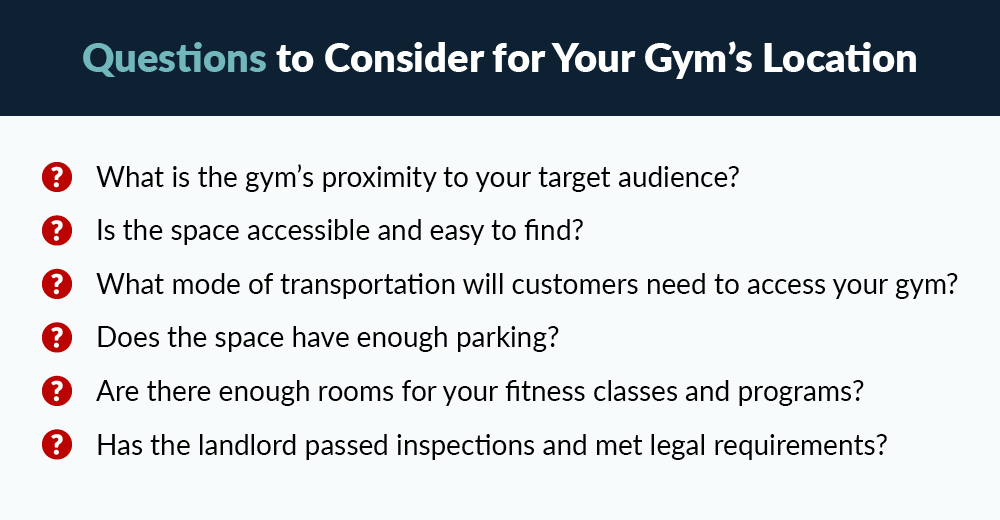
Finally, ensure all logistical details about the prospective facility align with your vision for the space. The gym should have enough parking to meet your needs, rooms for group fitness classes, locker rooms and bathrooms, and storage for additional supplies. You should also research your landlord to ensure they have met all safety and legal requirements and passed necessary inspections.
6. Build awareness for your gym.
Before you open a gym, the last step is to attract customers by building awareness. This is typically done through marketing your facility. To do this effectively, it’s critical to understand a few fundamental pieces of information about your business that should ideally be covered early in your business planning process. These foundational pillars that will lead your strategy include your target audience, business growth goals, and unique selling proposition. Once you have this information, you can confidently go into campaign building and implementation.
What Goes Into Marketing a Gym:
- Website. In the modern era of sales and marketing, having a website for your business is a critical first step to entering the digital sales arena. While many times, owners may think their social media pages can serve as this piece, it’s imperative to have your own website where your target customers can easily find you, lay out information in a logical/helpful manner, and drive conversions to boost your business.
- Social Media. Social media pages are a great way to reach your audience, display your facility, and give people a sense of your brand and/or community. These can be a great tool not only to attract additional eyes or interact with potential clients but also to drive interested leads to your website for additional information or to sign up with your business.
- Literature. Whether printed or digital flyers, landing pages, or sections of your website, content that properly leverages your unique selling points to the proper audiences (and their interests) is vital to maximizing conversions. Having a nice selection of versions for different audience types (both in content and digital/print format) can help you diversify your reach methods to maximize potential.
- Advertisements. Of course, running ads to reach your ideal audience is always possible. These can range from local newspapers and websites to social media-specific ads or boosted posts. While the possibilities regarding advertising potential may feel endless, it is crucial to ensure you have your sales funnel and marketing pieces properly in place first to reduce the number of lost leads.
- Promotions. Running tactical and interesting promotions can be a great strategy to leverage when you want to drive additional conversions. While the playbook of promotion types and timings is vast, consider what would resonate with your target audience and best align with your business plan. This can reduce the number of options to consider and allow you to be strategy-focused from the start when building out a promotional campaign.
- Co-Branding/Partnership Opportunities. The final point is looking into other businesses in your direct area that you can partner with to run co-marketing campaigns. These can include discounts for other nearby businesses to patrons, links to each other’s business websites, or even hosting events where you can combine goods/services for attendees. To grow mutually, the goal is to find partners with a potential target audience that overlaps and taps into each other’s customer base.
Remember that you’ll need to continue advertising your gym as long as it remains open to grow and attract new customers. When you start off on the right foot and connect with your ideal audience, you can reach them faster and tap into their network of friends and family to extend your reach to more new customers.
Additional Resources
While there are many moving parts to keep track of when you open a gym, creating detailed plans and documents to refer back to can help streamline the process. A business plan will help you stay true to your goals and vision for the gym and secure funding from investors. And with a robust marketing strategy, you can reach the people who want what your gym has to offer. Remember to take this process one day at a time, embrace challenges and setbacks, and have fun focusing on what you’re passionate about professionally.
To learn more about getting involved in the fitness community and following sustainable practices, check out these additional resources:
- When to Replace Running Shoes: 4 Things to Look For. If you are an avid runner, this guide can help you determine when it’s time to buy a new pair of shoes and recycle your old ones.
- Why (and How) Runners Should Recycle Running Shoes. Discover how to recycle athletic shoes and why it’s so important to part with them in a sustainable way.
- How to Start a Running Club: The Ultimate Guide. Learn how you can start a running club to create a supportive community of runners that help each other reach their goals.