


Choosing the right running shoes is crucial to maintaining your health as a runner. By wearing athletic shoes with the right support and cushion, you’re able to prevent injuries and achieve your distance goals.
If you have a pair of running shoes you love, chances are you get a lot of use out of them. However, as you put more and more miles on your sneakers, they’ll degrade and lose the support and structure you need to support your body. Running shoes past their prime can negatively impact your performance, make running uncomfortable, and even cause injuries.
To avoid costly injuries that could force you to limit or stop running, it’s essential to know when it’s time to invest in a new pair of running shoes. We’ll explore when it’s time to part with your athletic shoes and what to do with your old sneakers:
- When should I replace my running shoes?
- What are some signs that it’s time to replace my running shoes?
- What should I do with my worn running shoes?
You might get tempted to hold on to your sneakers for too long to avoid getting rid of them too soon—after all, athletic shoes can be expensive. However, there are ways you can measure the impact of your running on your sneakers and determine how much life they have left. Let’s get started by discussing a quick way to estimate your athletic shoes’ lifespan.

When should I replace my running shoes?
A simple way to know when to replace your running shoes is to track how much distance you run in them. A good rule of thumb is to replace your running shoes after 300 to 500 miles.
As a runner, you know how long it can take to reach that 500-mile threshold. Because you’ll wear the same shoes for a while, it’s easy to get used to the feeling of ill-fitting, worn-down shoes. To combat this, try running in a new pair of sneakers with less distance on them so you can spot differences between them more easily. If you don’t have an extra pair of running shoes, visit to your local running store, try on a new pair of athletic shoes, and note any differences you feel.

What are some signs that it’s time to replace my running shoes?
If you’re concerned because you don’t have any record of how many miles you’ve run in your shoes, don’t worry. While tracking distance can give you a general idea of your athletic shoes’ lifespan, your unique running habits are also a helpful indicator. For example, if you frequently run on rough terrain, your sneakers will break down faster than if you stick to treadmills.
If you still aren’t sure whether your sneakers still have life in them, there are other indicators that it’s time to invest in a new pair.
Running is more painful.
From casual runners to running club leaders, most runners have experienced some kind of soreness or pain during or after a run. However, if you start to feel more discomfort or pain than usual, your athletic shoes may be the culprit.
Once your sneakers begin to degrade, you may start to notice pain in these areas:
- Your joints. Look out for achy ankles, knees, and hips, especially if the pain is new or unexplained. Pain in your joints can indicate that the cushion in your sneakers is worn out and no longer absorbing the shock of your feet hitting the ground. Over time, this can cause chronic joint pain that limits how often you can run. So be sure to switch out your running shoes as soon as you notice new, unexplained joint pain.
- The bottoms of your feet. Sudden soreness in the soles of your feet is another red flag that your running shoes no longer support you. You may also notice stiffness or tension, particularly in the arches of your feet. Typically, this means that your sneakers are so worn that they no longer fit the shape of your feet.
Your athletic shoes should be an asset, helping to protect your body from impact and allowing you to run farther. Worn sneakers, however, can become a hindrance, slowing you down with annoying aches and pains and even causing more serious running injuries. Paying attention to your body during and after runs can help you proactively switch to a new pair of running shoes, saving you from unnecessary pain and discomfort.
You develop blisters.
Blisters are another source of discomfort many runners are familiar with in their training. It’s common to encounter blisters, especially on long, vigorous runs. But if you start getting consistent blisters or chafing after runs, it’s time to replace your running shoes.
Blisters typically happen as the fabric inside your sneakers rubs against your skin repeatedly. New blisters and skin irritation indicate that your athletic shoes changed shape after all of the running you’ve done. While blisters seldom have serious consequences, they can make running very painful until they’re healed. So it’s best to start looking for a new pair at the first signs of consistent chafing.
Your shoes are visibly damaged.
One of the easiest ways to know when to replace your running shoes is to simply give them a once over. Often, worn-down athletic shoes that are ready to be replaced will show visible damage. Having dirt, mud, or other stains on your sneakers usually doesn’t have any impact on how supportive they are when you run. Instead, be on the lookout for other damage like:
- Holes or tears in the fabric of your running shoes
- Deep wear in the rubber on the bottom of the athletic shoes
- Parts of your sneakers are beginning to peel off
- Soles or linings inside the running shoes tearing or sliding out
Keep in mind that some cosmetic wear and tear should be expected, especially if you are an avid outdoor runner. If your running shoes are showing minor tears but lack damage to the overall structure, they are most likely still supporting your feet and joints. If you aren’t sure about the extent of the damage, compare the visible damage against potential structure issues we’ll discuss in the next section.
The structure of your shoes is worn.
The structure of your running shoes is what supports and cushions your feet while you run—think of the thick rubber sole or the arch support. When these important structural components begin to lose their integrity, they can no longer support your feet and protect you from the impact of running. So, how can you tell when your athletic shoes’ structure is worn down, misshapen, or broken?
There are a few easy ways you can check your shoes for damage to their structural integrity, including:
- “Dead” midsoles. The midsole of a running shoe is the cushioned part of the shoe that lies between your foot and the outsole (the part that touches the ground). The midsole is meant to cushion your foot against the impact of running, giving you a slight bounce or springiness while running. If the midsole is “dead,” the running shoes won’t have any bounce or rebound after your feet hit the ground. This is a sign that the foam in your athletic shoes is worn or compressed beyond repair.
- Your midsole is misshapen. Creases, dents, or holes in your midsoles are another indicator that the foam in your shoes is compressed. You can feel for creases or bumps inside the running shoe or use a flashlight to check for any visible issues. Typically, you’ll start to notice this issue around when your athletic shoes feel “dead.”
- The outsoles are worn. Flip your sneakers over and take a closer look at the rubber on the bottom. You should look for heavy wear at the front and middle of the running shoe. If you can see any areas where the foam of the midsole is peaking through, you need to get new shoes. Keep in mind that heavy wear on the heel of your running shoe is common, and it isn’t a problem unless it interferes with your technique or causes pain and discomfort.
These structural issues can be difficult to fix and unfortunately signal the end for many pairs of sneakers. While you could try refurbishing the running shoes, it can end up costing more to fix them than it would to simply buy a new pair. But just because you can’t use your athletic shoes for running anymore doesn’t mean you need to throw them away—instead, choose a more sustainable method that brings the sneakers new life.

What should I do with my worn running shoes?
When it finally comes time to replace your athletic shoes, you might feel lost about what to do with them. It’s easy to just toss them out. But this can have negative implications for the environment. Each year, 300 million pairs of shoes get thrown away only to sit in landfills for decades until they decompose.
Instead, look for a way to give your worn running shoes new life. Depending on what condition they are in (for example, maybe you wore the shoes a few times and just don’t like how they feel), you could sell or donate your running shoes. There are also ways to transform your sneakers and give them a new purpose, like using them as pots for plants. One of the best (and easiest) things to do with worn running shoes is to recycle them.
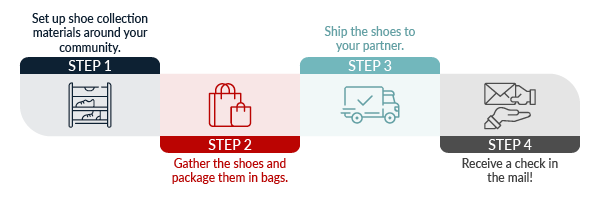
If you are a part of a running club or own a running store or gym, consider organizing a shoe recycling program. While there are many different ways to recycle running shoes, partnering with a social enterprise facilitator like Sneakers4Good makes the process as simple as possible. After choosing a partner, the next steps include:
- Setting up athletic shoe collection materials in your community.
- Gathering the sneakers and packaging them in bags provided by your social enterprise partner.
- Shipping the running shoes to your partner.
Once you ship the athletic shoes, your partner will process the sneakers for recycling and send you a check in the mail. Not only can you make a difference with the athletic shoes from your community, but sneaker recycling programs are a great way for small businesses and running clubs to raise funds to meet their needs.
Additional Resources
Knowing the right time to switch your running shoes for new ones is key to your wellness. The right pair of running shoes keeps your muscles and joints healthy, spares you from injuries, and allows you to stay active. Plus, knowing how to part ways with your old athletic shoes sustainably can help the environment.
To learn more about sneaker recycling programs and sustainability, check out these additional resources:
- What to Do With Old Running Shoes: 18 Eco-Friendly Ideas. Parting ways with your favorite athletic shoes is never easy, but you can do it sustainably to power change in the environment. These eco-friendly ideas can help you make a positive environmental impact with your running shoes.
- Donate Running Shoes: The Step-By-Step Fundraising Guide. It’s likely that everyone has a few pairs of old athletic shoes in their closet. Help support a good cause.
- Why and How to Recycle Running Sneakers. This guide explains how you can sustainably part with your old running shoes by recycling them.
