
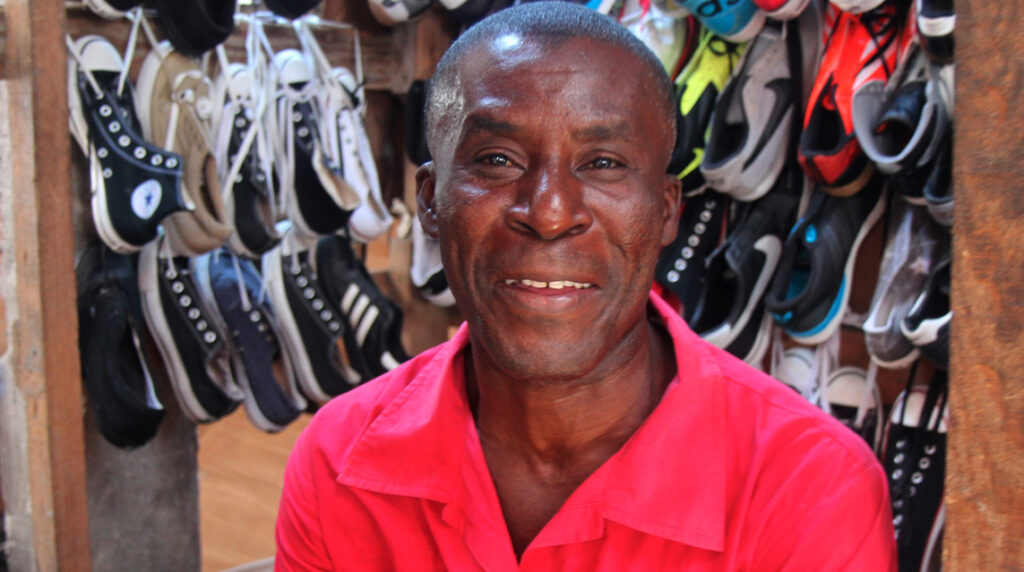

If you’ve become a sustainable sneaker reuse movement member, have you ever wondered what happens to running shoes? One answer is that they don’t go into landfills. Annually, an eye-popping 300 million pairs of sneakers and shoes go into landfills. We have enough footwear in landfills to circle the Earth—multiple times. A second answer is that pre-loved sneakers end up in the hands of small businesses.
Systemic poverty impacts quality education access and sustainable jobs. As a result, many people have to create their luck. They do it with small businesses in the reuse economy. So, when marathons, run stores, gyms, or individuals participate in activities such as a mail-in reuse bag program, an adventure for the sneakers begins. In short, they go from you to people in about two dozen countries worldwide.
From Your Closet to a Global Adventure
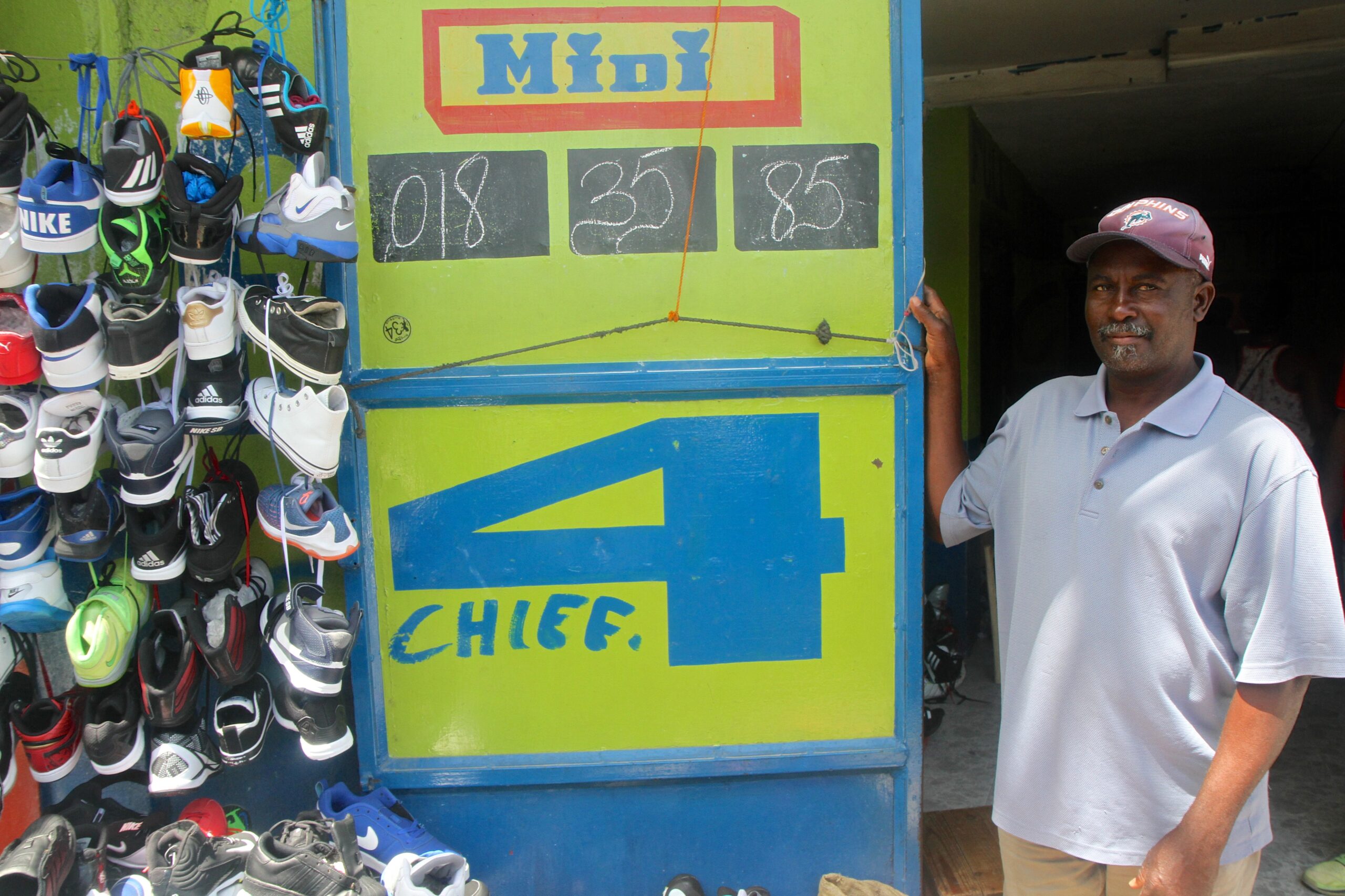
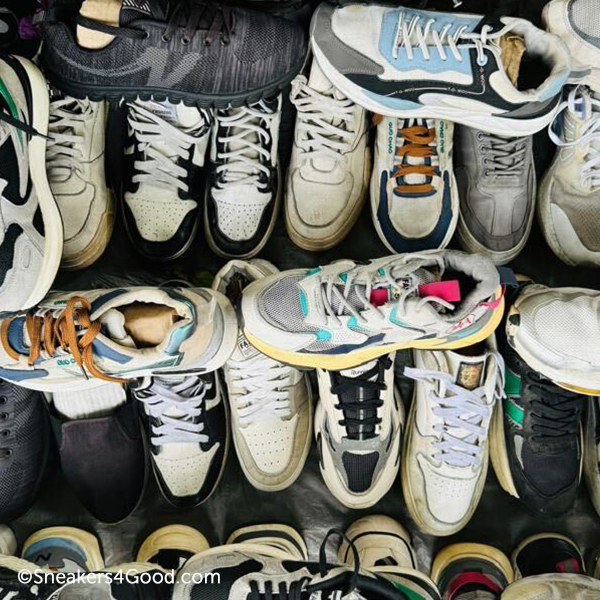
Think of it this way: the trusty sneakers that carried you to road race finish lines or on daily jogs are a hand-up to people in the Global South and other developing countries. Ethical and proven providers take athletic shoes and ship them worldwide. The fact is that 70% of the world’s population wears reused clothing, shoes and sneakers. That’s a super sizable part of the population. In turn, small businesses sell the apparel.
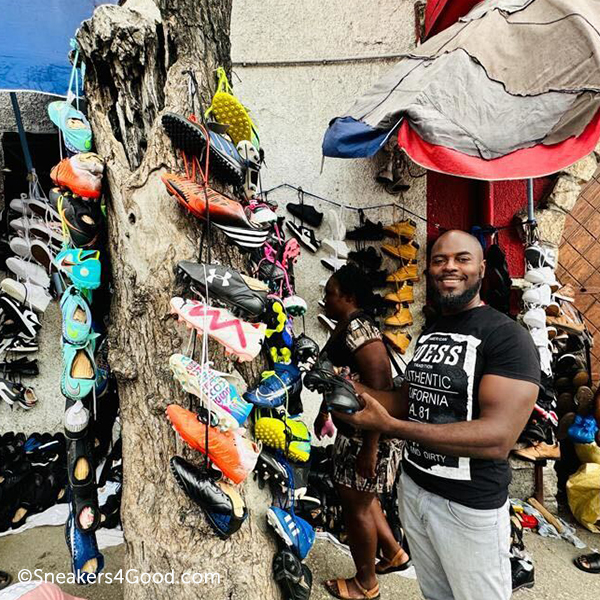
Micro-enterprises worldwide don’t necessarily have to have a brick-and-mortar business as we do in North America. Due to resources and customs, micro-entrepreneurs may sell sneakers from small marketplaces or open-air stalls. The quality sneakers gathered and shipped to them from North American and European countries are an economic lifeline.
The Real MVP: Micro-Enterprises Making Moves
Many people in the United States may not realize the extent of the need in other countries worldwide. Further, they may not understand that whenever they throw a pair of sneakers in the trash, those items end up in landfills. In North America, municipalities, far and wide, have to pay for all this garbage. These funds could be used for education or other community needs.
It’s one of the reasons why small businesses worldwide in the reuse economy are MVPs. As we know, all families want economic opportunities. Every parent wants to ensure that there’s a roof over the family’s head and food to eat. Moreover, micro-entrepreneurs want to ensure they have sustainable incomes to provide for the long term. The economic opportunities of the reuse economy are significant.
More Than Just a Donation—It’s Sustainability in Action
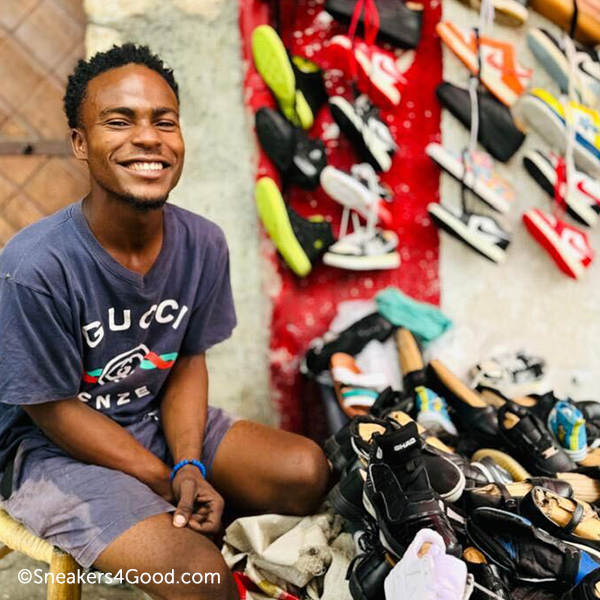
Sneaker reuse is a game-changer. This is not only for small businesses globally but also for communities and the planet. Instead of sneakers decomposing in landfills, they become the economic fuel for people around the world. Decomposition can take between 25 and 1,000 years, depending on the make-up of the running shoes. All the while, through decades or generations, they release poisonous toxins into soil, water, and air.
When they become inventory for micro-enterprises, they get a second wind and a new life. So, if you had to pick between throwing shoes into the trash and having them harm the environment and life on Earth, would you choose to enter the reuse economy or keep things as they are? Many would say joining the reuse economy is a more sustainable path forward for everyone.
But, let’s be clear. This isn’t a charity play. It’s not about shipping sneakers overseas and dumping them in foreign communities. Ethical and socially responsible providers care about economic empowerment, sustainability, and creating impactful change. When anyone mindfully enters the reuse economy, they help:
- Create sustainable jobs and work opportunities.
- Spark a global chain reaction starting by giving away sneakers.
- Provide quality athletic shoes to people who need the inventory.
The Ultimate Relay Race
Every runner understands that in a relay race, teamwork is the secret sauce. Any one of us gets a chance to pass the baton. But we have to be part of the road race. Every sneaker that you and others contribute doesn’t just have a profound economic impact. It also has an environmental impact. How so? Here’s the formula: CO2 saved is the # of pairs x 30. Gallons of water saved is # of pairs x 500.
It doesn’t matter if you’re a seasoned athlete or a weekend runner. Every pair of sneakers, like every step, matters toward the miles run. The same goes for environmental sustainability and the economic empowerment of small businesses worldwide. So, the next time you want to retire your old sneakers, think about helping others write a new story for change and impact.
© 2025 Sneakers4Good. All Rights Reserved.