
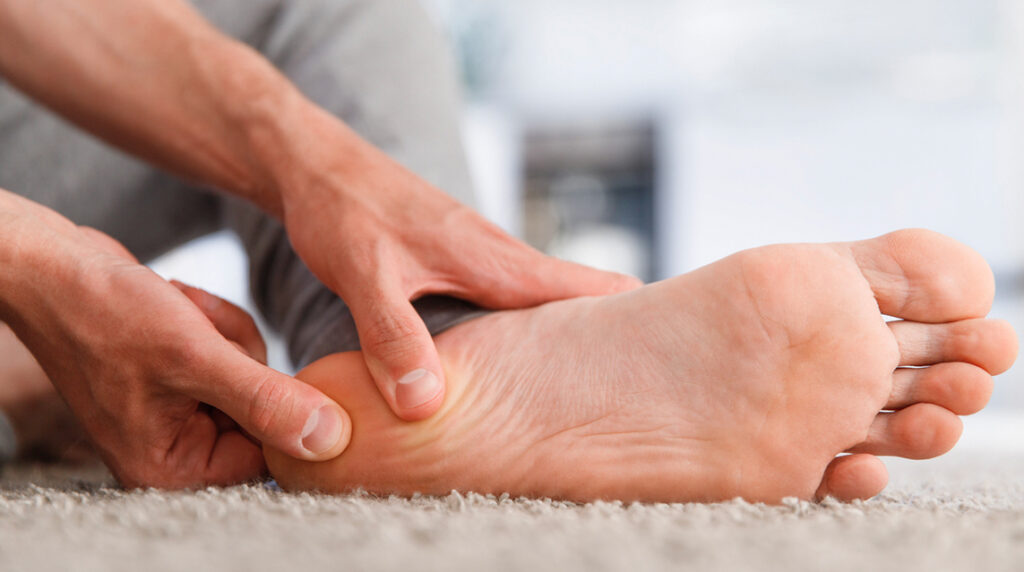

Every runner knows the feeling when you’re getting up out of bed and moving to what comes next with a sense of fun. For the Americans who deal with plantar fasciitis, a run can feel like stepping on glass. That’s why our team conducted research and reviewed the reviews to provide you with the eight best running shoes for plantar fasciitis. So, let’s dive right in!
What is Plantar Fasciitis? Causes, Symptoms, and Why Shoes Matter
For people who have plantar fasciitis, the issues go beyond choosing the right sneaker for your foot. They have to deal with a painful biomechanical issue that can make running difficult. So, what is plantar fasciitis? The condition involves the band of tissue that connects your heel bone to your toes. Common symptoms of the condition include the following:
- Sharp heel pain, especially with the first steps out of bed in the morning
- Arch pain that worsens after long periods of standing or running
- General stiffness in your foot after sitting or resting
- Flare-up pain at the end of a long run, which lingers
That band serves as a bowstring that absorbs the shock of your feet hitting the ground. In turn, it supports the arch of your foot with each stride. But when that tissue gets stretched, inflamed, or strained, the chances are that you have plantar fasciitis. According to Harvard Health, the condition affects “…active adults between the ages of 25 and 65 years old.”
If this is a condition you suffer from, there’s good news. The right pair of running shoes can make a significant difference. It can help you manage a flare-up and even prevent painful flare-ups. In fact, the wrong running shoes can make plantar fasciitis worse, including sneakers without proper cushioning, arch support, or heel stability.
What Causes Plantar Fasciitis in Runners
Plantar fasciitis is a condition that can affect many runners because of the repetitive impact of their feet absorbing significant force each time they hit the ground. While it doesn’t appear overnight, it builds over time and usually flares up due to a combination of factors. For instance, overtraining is a big factor.
If you overtrain, say, for a road race or marathon, and increase your mileage too quickly, you’re not giving your plantar fascia time to adapt. When you don’t stretch and prepare your body for a run, tight calves and Achilles tendons can create the condition over time. Other culprits include running on hard surfaces, flat feet, high arches, and wearing worn-out sneakers.
What Should You Look for in Running Shoes for Plantar Fasciitis?
When you’re looking for new running shoes, it’s essential to remember that not every pair is suitable for plantar fasciitis. So, if you have the condition, it’s essential to keep the following in mind:
- Arch Support: Look for running shoes with medial support that supports your arch and reduces pressure on the plantar fascia.
- Heel Cushioning: A well-cushioned heel serves as a shock absorber every time your foot impacts the ground.
- Heel Drop: A moderate-to-high heel-to-toe drop (8–12mm) reduces pressure on the Achilles tendon and plantar fascia by keeping the heel slightly elevated.
- Stability: Stability features, such as GuideRails technology or a reinforced midsole, help to prevent overpronation, lessening any strain on the arch.
- Wide Toe Box: A roomy toe box prevents toe crowding, reduces pressure on the forefoot, and lets the foot push off the ground naturally.
- Shock Absorption: When shopping, look for midsoles that dissipate impact energy across the foot rather than simply softening it.
- Orthotic Compatibility: If you use custom orthotics, make sure the running shoe has a removable insole to accommodate the orthotics.
The 8 Best Running Shoes for Plantar Fasciitis
The following running shoes our team selected were based on research of independent lab testing, expert reviews, and consumer performance. So, if you’re a casual or long-distance runner, or somewhere in between, there’s a running shoe here for you.
1. Saucony Triumph 23 — Best Overall
Price: ~$169.95 | Best For: Daily training, heel strikers, runners with plantar fasciitis or general foot pain
Based on our research, the Saucony Triumph 23 earns the top spot. Independent lab tests by RunRepeat measured the heel stack at 42.3mm, which is excellent. The energy return rate was 67.6% in the heel and 71.2% in the forefoot. The 10mm heel drop helps to reduce plantar fascia pressure. Overall, the running shoe delivers consistency and relief, but we have one caveat. The toe box is slightly narrow, so if you have wide feet, make sure to try them.
2. Hoka Bondi 9 — Best for Shock Absorption
Price: ~$165 | Best For: Runners who need maximum impact protection, walkers, heavy runners
Hoka has a great reputation for providing maximum cushioning and rocker geometry to help push forward runners. The running shoe has a heel cushion height of 41.3mm, which is 7mm above the average. For those with plantar fasciitis, the rocker sole rolls your foot at every stride instead of forcing the heel to absorb impact. The toe box is ample and even available in wide and extra-wide options.
3. Brooks Adrenaline GTS 25 — Best for Road Running
Price: ~$140 | Best For: Overpronators, road runners, mild plantar fasciitis prevention
These running shoes have served as a cornerstone of stability for years. The sneakers have a support system that doesn’t force the feet into a corrected position. Instead, it creates soft bumpers that support excessive inward rolling before there’s an issue. The running shoes have a 12mm heel drop, which helps reduce arch strain and shift the load away from the plantar fascia. It comes in various widths, making it a good option for most runners.
4. Brooks Glycerin Max 2 — Best for Long Runs
Price: ~$170 | Best For: High-mileage runners, long-distance training, stability seekers
These running shoes are created for runners who need maximum support, especially during weeks of many miles. The midsole provides excellent softness for extended running, and the GuidRails system provides firm medial support and a superior heel counter. The 6mm drop and 45mm rearfoot stack make the sneakers a great option for runners with plantar fasciitis looking to log maximum miles.
5. Hoka Clifton 10 — Best for Everyday Runs
Price: ~$145 | Best For: Everyday training, neutral runners, versatile daily use
The Clifton 10 is created for balance and delivers on the famed cushioned Hoka ride. It offers runners metarocker geometry in a lighter, more versatile running shoe. That makes it a good choice for early morning runs that lead into running errands as well. The heel cushioning provides excellent support. Moreover, the upper is made of breathable mesh intended to keep feet cool, especially during warm days.
6. KURU ATOM 2 — Best for Versatility
Price: ~$155 | Best For: Daily wear, cross-training, walking, lighter runs
The KURU ATOM 2 isn’t your everyday high-performance running shoe, which is why it stands out. It’s manufactured using proprietary KURUSOLE technology with a curved heel cup that wraps around your heel pad and hugs the most vulnerable parts of the foot of those who suffer from plantar fasciitis. The cushioning provides a 10mm heel drop and 28mm of heel cushion height in a non-orthopedic-looking running shoe.
7. ASICS Gel-Kayano 32 — Best for Heel Pain
Price: ~$165 | Best For: Overpronators, runners with heel pain, long-distance stability
For decades, Asics has engineered the Gel-Kayano, and the 32nd iteration ensures a sleeker legacy. The PureGel tech in the heel and updated GEL cushioning ensure targeted impact absorption precisely where plantar fasciitis pain tends to occur. The 4D Guidance System helps control overpronation throughout the entire gait, not just at the start of the stride. That makes the running shoe one of the most technically sophisticated stability sneakers.
8. Adidas Ultraboost 5X — Best for Durability
Price: ~$190 | Best For: Runners who prioritize durability and energy return, everyday use
If you’re seeking durability, responsive cushioning, and strong stability, then check out the Adidas Ultraboost 5X. This running shoe is excellent for runners who log a lot of miles, but don’t want to rotate their sneakers that often. The Torsion System, built into the midsole, resists lateral movement and helps ensure stability that can aggravate the plantar fascia, especially during long runs. The sneakers have great wear resistance.
What Are the Worst Running Shoes for Plantar Fasciitis?
Now that you know the best shoes for plantar fasciitis, let’s get into what you should avoid. Some sneakers can worsen the condition. For instance, you want to avoid minimalist or zero-drop sneakers. While these running shoes are fine for some runners, they can put too much pressure on the plantar fascia. For those who want to avoid a flare-up or suffer from the condition, it’s best to avoid these types of running shoes.
Worn-out sneakers are just as bad, even if they look fine from the outside. Running shoes compress when they’re still used beyond their running life. It’s a reason why most runners rotate their sneakers every 300-500 miles. The issue is that you don’t see the compression. Also, sneakers with no arch support, such as canvas sneakers, offer little support, so running in them is asking for trouble.
There are other things to avoid when looking for running shoes for plantar fasciitis:
- Wrong size
- Too tight, which compresses the forefoot and heel
- Too loose, causing the foot to slide around
- Cheap, flat, worn-out sneakers aren’t right for plantar fasciitis
Additional Tips for Running with Plantar Fasciitis
The right running shoes are the first step, but managing plantar fasciitis also requires a few more habits:
- Rotate your running shoes on schedule. A good rule of thumb is to rotate your running shoes with 300-500 miles to avoid the impact of sneaker degradation.
- Stretch your calves and feet daily. Every morning, stretch your calves and feet. A simple wall stretch can make a difference. Use a towel to stretch your plantar fascia.
- Increase mileage gradually. To prevent plantar fascia overload, increase mileage by only 10% per week.
- Consider custom or quality OTC orthotics. For some runners, the best choice is custom orthotics, or a quality OTC arch support, such as Superfeet or Powerstep.
- Manage recovery days. On these days, consider swimming, cycling, and easy walks to keep the blood flowing without the impact.
When Should You See a Doctor for Plantar Fasciitis?
While many plantar fasciitis cases resolve themselves with the use of running shoes for plantar fasciitis, there may be times when you need to see a medical professional. It may be time to speak to a doctor if you experience the following:
- Heel or arch pain lasting more than 6–8 weeks with no improvements
- Severe pain that significantly limits your ability to walk or function
- Swelling, bruising, or redness around the heel
- Worsening symptoms despite consistent care
If you see any of these issues, a sports medicine doctor or podiatrist can help you determine whether your case would benefit from physical therapy, corticosteroid injections, a night splint, or another treatment. In rare cases, plantar fasciitis may require surgery.
Don’t Throw Away Old Running Shoes — Give Them a Second Life!
You’ve got the info you need to find the right pair of running shoes for plantar fasciitis. As a result, you might find that it’s time for you to get rid of some of your gently worn running shoes. Before you toss them into the trash, consider that they still have value! They can do good. At Sneakers4Fund, depending on whether you’re an individual or part of an organization, you can support sustainability efforts via the following free programs:
Sneakers4Good partners with organizations and individuals to give running shoes a second life by redirecting them from landfills and trash. In short, your running shoes can help communities here in the U.S. through innovative CSR programs, the environment, and people worldwide who resell the sneakers. Get started with Sneakers4Good and do a good deed.
The Right Shoe Can Change Everything
Plantar fasciitis isn’t a condition that has to sideline you. In other words, with the right pair of running shoes, most runners can manage it and keep running. Whatever you choose, remember that the most essential thing is to ensure your running shoes fit your foot properly and to rotate sneakers, even if they appear fine. Again, you don’t need to sit it out if you’re careful on your sneaker selection and habits.
© 2026 Sneakers4Good. All Rights Reserved.