
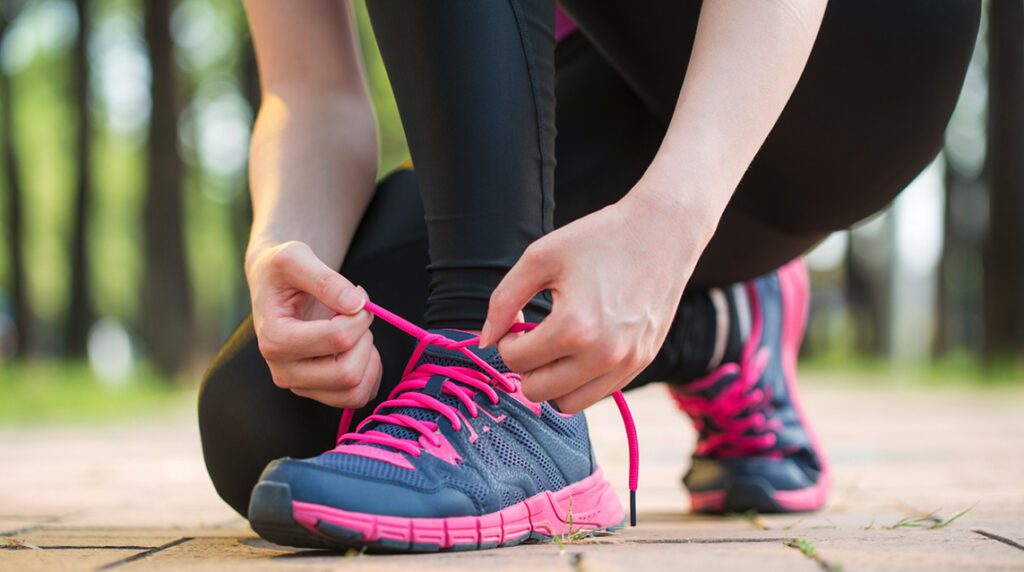

You’ve done your research and bought yourself a pair of awesome running shoes. They have all the features you were looking for: support, comfort, and an eye-catching design. Now, it’s time to take them out on your first run.
What’s the first thing that you do after you put them on?
Tie them.
Many runners hyperfixate on buying the right running shoes but overlook the importance of how they lace them. Contrary to popular belief, the way that you lace and tie your sneakers is a critical part of running. Not all lacing techniques are created equally, though; different lacing and tying techniques can serve different purposes.
Are you wondering how to tie your running shoes? In this guide, we’ve rounded up the 5 best lacing methods for runners looking to optimize their run. Here’s what you can expect to learn:
- Runner’s Loop: Creates a secure fit around your ankle
- Window Lacing: Removes pressure from the top of the foot, creating an open “window” over a painful area
- Reef Knot: Less likely to loosen during runs
- Parallel Lacing: Distributes pressure more evenly
- Wide Forefoot Lacing: Reduces pressure around the toes
How to Tie Running Shoes: 5 Methods Every Runner Should Know
Whether you’re a beginner runner or an experienced one, you likely know that the athletic shoes that you choose play a big role in your foot health, comfort, and performance. Did you know that how your athletic shoes are secured directly affects those things, too?
Each potential lacing technique solves a different problem. Here are tutorials on 5 of the most popular lacing techniques for runners, along with an overview of the common issues they can help alleviate.
1. Runner’s Loop
Best for: Runners looking to secure their heels and reduce slipping during runs.
How to Do It:
- Lace your sneakers normally until the final eyelets
- Rather than crossing the laces immediately, thread each lace into the final remaining eyelet on the same side, creating two small loops
- Cross each lace, feeding it through the opposite loop
- Pull both ends until the heel feels snug
- Tie your shoelaces normally
2. Window Lacing
Best for: Relieving pressure from the top of the foot, creating an opening over a painful area
How to Do It:
- Lace normally until you reach the painful area
- Rather than crossing, run each lace vertically to the eyelet above it. Continue until you’ve passed the painful area
- Resume the normal crisscross pattern above the opening
- Pull both ends until the running shoes feel snug, but not suffocating
- Tie your shoelaces normally
3. Reef Knot
Best for: Runners who are looking for a secure hold that won’t loosen as easily during runs.
How to Do It:
- Tie the first overhand knot
- Form a loop
- Wrap the other lace around the loop you created
- Pull through in the opposite direction
- Tighten until both of the loops lie flat horizontally
4. Parallel Lacing
Best for: Distributing pressure more evenly
How to Do It:
- Thread the lace straight across the bottom two eyelets
- Feed one lace through the athletic shoe and vertically through the next eyelet
- Bring it across to the eyelet on the opposite side
- Repeat, alternating
- Tie normally
5. Wide Forefoot
Best for: Reducing pressure around the toes and giving the forefoot additional room without loosening the heel
How to Do It:
- Skip one of the lower crossover eyelets, near the toes
- Lace normally until you reach the middle of the shoe
- Finish with a Runner’s Loop to secure the heel
- Tighten gradually, ensuring comfort
- Tie normally
Lacing techniques aren’t one-size-fits-all. Our top tip? Experiment with different methods until you find your most comfortable fit!
Choosing Athletic Shoe Laces for Running Shoes
The laces you choose for your athletic shoes can affect comfort and performance, just as lacing techniques do. Worn-out or poor-quality laces can loosen more easily, fray, or create uneven pressure.
There are plenty of lace options out there, and which you should choose depends on the issues you’re aiming to solve. Here are a few common considerations for shoelace selection, along with an overview of what each option addresses.
Flat vs. Round Laces
Flat Laces:
- Provides more surface area, and therefore better grip
- Less likely to come untied or loosen during long runs
- More even distribution of pressure
- Ideal for runners and everyday training
Round Laces:
- Slide through eyelets more easily
- Easier to tighten
- Most common for hiking/casual footwear
- May be preferred by runners who frequently adjust fit
Elastic vs. Traditional Laces
Elastic Laces:
- Stretch with foot movement
- Can enable shoes to be slipped on and off more easily
- Popular for triathletes (more seamless transitions between events)
- Can improve comfort for runners who experience foot swelling
Traditional Laces:
- Allows for customization with tension in different parts of the sneakers
- Better for specialized lacing techniques
- More stability
- Most customizable
Choosing the Right Lace Material
- Polyester: Most common choice for its durability and stretch-resistance
- Cotton: Excellent grip, but may wear out faster than other materials
- Synthetic-Blend: Dry quickly, perform best in wet conditions
- Wax-Coated: Less likely to loosen, but also less common/more difficult to find on running shoes
Choosing the Right Lace Length
Ultimately, lace length is dependent on how many eyelet pairs your athletic shoes have. Running shoes typically use laces between 45 and 63 inches long, depending on the design. Here are a few things to keep in mind when selecting your lace length:
- Choosing laces that are too short can prevent you from being able to do specialty lacing techniques
- Choosing laces that are too long can create unnecessary bulk/present a tripping hazard
Finding a happy medium can help with comfort and longevity. Be sure to compare your replacement laces to the originals before purchasing to ensure that you aren’t buying laces that are too short or too long.
Signs Your Running Shoes Are at the End of Their Lifespan
If your lacing adjustments aren’t working, it may be a sign that your running shoes themselves are worn out. Here are a few clear signals that your sneakers have reached the end of the road:
- The cushioning feels flat. Worn-out soles offer less shock absorption, which can leave your legs feeling more exhausted after runs.
- The outsole tread appears worn smooth. If you flip over your athletic shoes and there’s no texture, it’s likely time to let them go. A worn tread reduces traction and increases the risk of slipping.
- The heel counter is collapsed. If your running shoe’s heel no longer stays in place, you’re risking injury every time you walk or run in it.
- Persistent discomfort despite troubleshooting methods. Replacing laces won’t fix foundational issues with your athletic shoes. If you’ve tried everything and are still uncomfortable, it’s likely that the shoes no longer provide enough support.
If you’re facing any of these issues, it’s likely time to get a new pair of sneakers. What if the old ones could be given a new life instead of being tossed to the back of your closet or piled up in a landfill?
Sneakers4Good’s Mail-In Reuse Bag program is a quick, simple, and convenient way to extend the life of your old athletic shoes. Here are the steps:
- Order a Sneakers4Good mail-in reuse bag
- Fill it with your gently worn, used and used athletic shoes
- Send the bag back (using the prepaid label)
That’s it! All you have to do is fill a bag and ship it back; we take care of the rest.
Running Shoes Don’t Fit? Give Them a New Life with Sneakers4Good
If you’re experiencing discomfort, trying out different lacing techniques may help to alleviate it. With that said, if you’ve experimented with different lacing techniques and your athletic shoes are still uncomfortable, it’s likely the running shoes, not the laces. Running on worn sneakers isn’t worth the risk; replace them to avoid injury, strain, or further discomfort.
Once you’ve found your next pair of running shoes, take the sustainable next step by giving your old ones a second life. Sending your old sneakers to Sneakers4Good through the mail-in reuse bag program is a great way to upgrade your sneaker game while giving back.
Want to learn more about Sneakers4Good’s mail-in reuse bag program? Get started here.
© 2026 Sneakers4Good. All Rights Reserved.