



5K runs are an excellent opportunity for various organizations to unite their community’s love of running (and even use it to support a great cause!). If you’re interested in race directing and hosting your first 5K, this guide will cover the steps you need to take:
- Start with a 5K goal.
- Build your 5K event team.
- Establish your 5K budget.
- Nail down overarching 5K details.
- Obtain race permits, permissions, and certifications.
- Solicit 5K race sponsors.
- Advertise your 5K race.
- Address safety and medical considerations.
- Coordinate with race suppliers.
- Recruit 5K volunteers.
- Run your 5K run!
- Handle post-event tasks.
With these tips, you’re sure to host an event that runners are excited to participate in. Let’s get started!

1. Start with a 5K goal.
Before planning your race, ask yourself why you want to host a 5K.
Social good fundraising is among the most common reasons organizations host a 5K. There’s a common misconception that only nonprofits host these runs, but businesses and corporations also do. Most companies fundraise on behalf of a chosen nonprofit or community organization to demonstrate corporate social responsibility (CSR), boost employee engagement, and improve their reputation in the community.
Regardless of what the purpose of your 5K is, create your goal using the SMART framework:
- Specific. Your goal should clearly outline what needs to be accomplished and what steps must be taken to achieve it.
- Measurable. There should be easily quantifiable or trackable metrics attached to your goal so you can assess your progress. For example, if you’re collecting gently worn, used and new shoes to support sustainability during your 5K, one of your metrics might be the number of pairs collected.
- Achievable. Your goal should be realistic based on your organization’s capabilities, resources, and time.
- Relevant. The goal should be relevant to your current organizational priorities and be a worthwhile use of your time and resources.
- Timely. Your goal should have a clearly defined deadline for completion.
Using the SMART framework, your team will have a clear picture of a successful 5K and an action plan for achieving it. For example, if your retail store or gym plans a 5K, your goal might be to raise over $10,000 for next semester’s science lab renovations for a local school, providing students with a safe learning environment to conduct science experiments.
2. Build your 5K event team.
Once you have a goal that outlines why a 5K is the right event at this time, it’s time to choose your event team. These individuals will support you in the event planning and hosting process. Ideally, your team should include the following members:
- Event coordinator oversees event planning, logistics, and execution.
- Finance manager ensures that you stay within budget.
- Marketing lead handles promoting the 5K.
- Sponsorship manager handles soliciting and managing sponsor relationships.
- Fundraising coordinator organizes fundraising activities tied to your 5K.
- Race operations manager handles all your race logistics.
- Volunteer coordinator oversees all your 5K volunteers.
If your team is not large enough to have one person for each role, people can double up on related roles. For example, your fundraising coordinator may also handle sponsorships. Or, your event coordinator could also serve as the finance manager.
3. Establish your 5K budget.
Your 5K budget can be broken down into costs and income, such as:
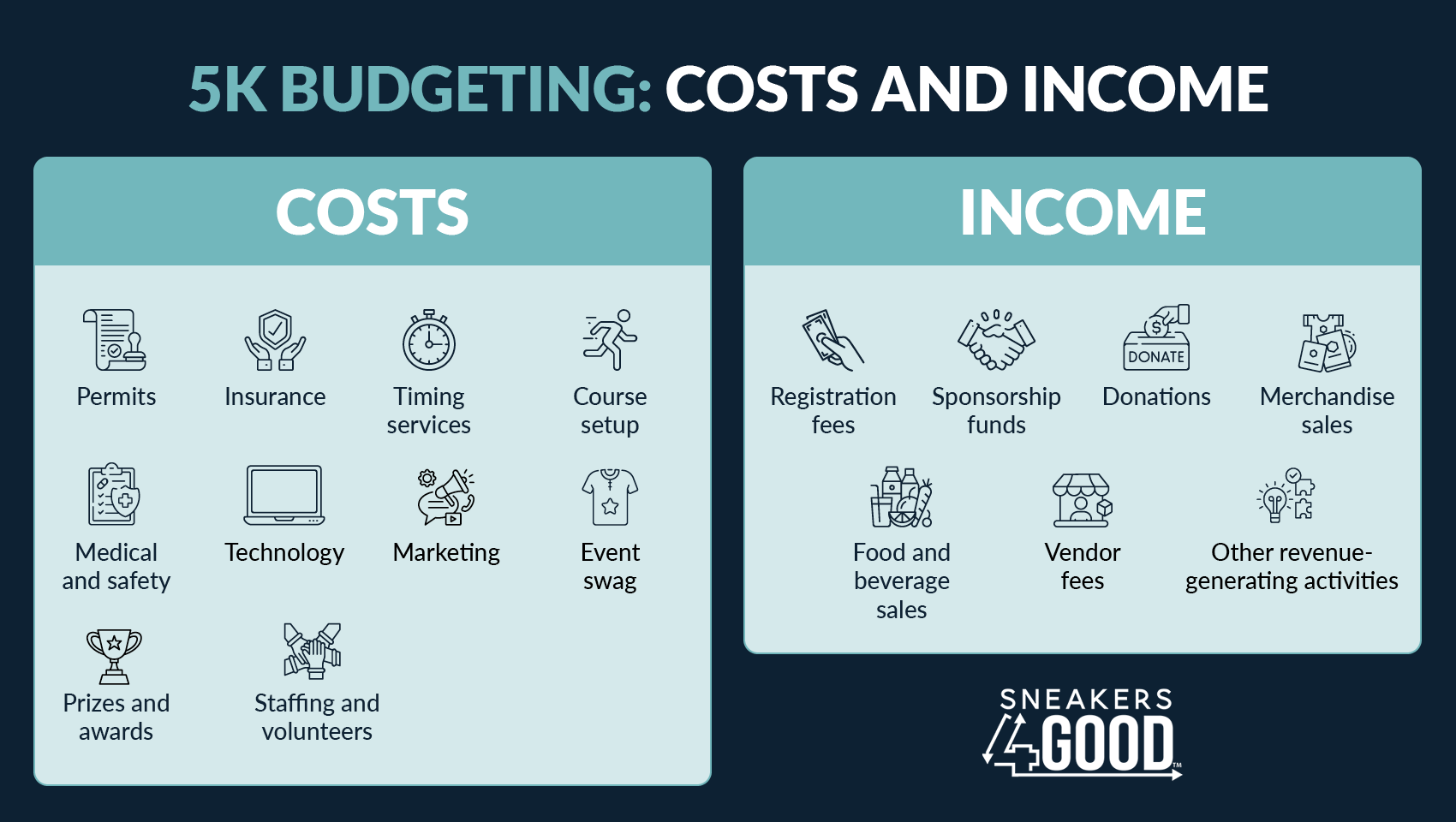
Costs
- Permits
- Event insurance
- Timing services
- Course setup
- Medical and safety
- Staffing and volunteers
- Technology, such as online registration platforms
- Marketing
- Event swag, such as t-shirts
- Prizes and awards
Income
- Registration fees
- Sponsorship funds
- Donations
- Merchandise sales
- Food and beverage sales
- Vendor fees
- Other revenue-generating activities
Factor in both costs and income to determine if hosting the 5K you’re planning is feasible and profitable. If not, make adjustments until it is. For example, you might lower costs by offering fewer swag options to runners. You could also increase your income by partnering with Sneakers4Good, turning gently worn, used, and new running shoes into extra cash for your 5K.

4. Nail down overarching 5K details.
Now you’re ready to establish crucial details about your 5K, such as:

- Theme. A theme helps community members connect with your 5K, increasing participation levels. Businesses or corporations hosting a 5K may tie their race to a specific charity or cause. For example, you might host a “Pinktober” race and partner with a breast cancer nonprofit for your October 5K.
- Name. Choose a catchy, informative name that will pique community interest. Check that no other 5K races in your area have the same name to avoid confusion. For instance, in the example above, you might name your marathon “Pink Path Run.”
- Date. Since most people won’t want to run a 5K before or after work, hosting your event on Saturday or Sunday is generally advisable. You might also want to choose a date in the spring or fall when temperatures are more moderate and less harsh for outdoor activities.
- Location. Determine where your race will be held and chart a course for runners. If your 5K targets individuals of all ages, including children, you might want to pick a less challenging route. Your community members may also be interested in a scenic route that allows them to appreciate the beauty of nature.
Keep your community in mind as you finalize these details. For example, if you’re part of a school that wishes children to participate in your 5K, you can choose a playful name. On the other hand, if you own a run retail store that specializes in cutting-edge running equipment for maximum running efficiency, you may want to choose a more challenging race course.
5. Obtain race permits, permissions, and certifications.
Hosting a 5K usually requires permits and permissions from your local government. To create a safe environment for runners, your local government may need to shut down certain areas to ensure no vehicles pass through. You’ll provide your local governing body with the key details of your event, along with any other documentation they request.
You may be required to purchase liability insurance for your 5K to obtain the necessary permits. This protects the local municipality from potential lawsuits resulting from participant injuries or property damage and also protects you, as the organizer, from similar claims.
Additionally, you may certify your event, meaning that a race governing body (such as USA Track & Field) has measured and verified your course. Having a certified course allows runners to compare their performances more accurately with runs on other courses, as it shows that the distance they ran is eligible. Some runners may also wish to use their run to qualify for other runs or marathons.
However, certification is optional. If your audience consists mainly of casual runners who aren’t interested in improving their performance or qualifying for other runs, it might not be necessary.
6. Solicit 5K race sponsors.
Sponsorships can supplement your budget with additional funds, supply free products, and more. However, not all companies will be interested in partnering with your 5K event. Start by seeking sponsorships from:
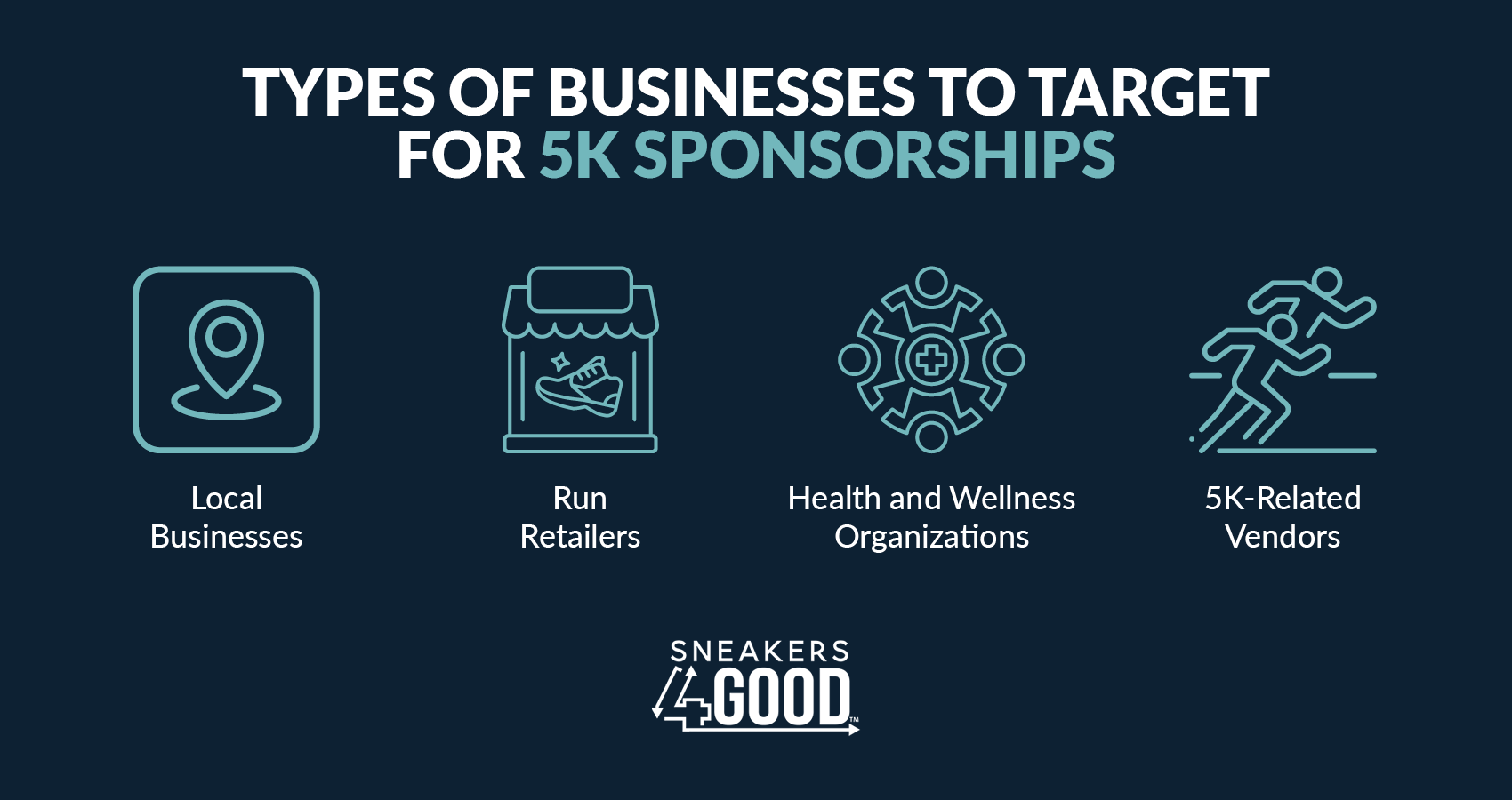
- Local businesses. Businesses in your community will likely be interested in sponsoring a local event to show that they’re invested in giving back to their community, which boosts their reputation and brand awareness.
- Run retailers. Since your event naturally attracts runners, running-related companies stand to gain valuable customers and exposure through sponsorship.
- Health and wellness organizations. Gyms, spas, health food restaurants, massage businesses, and other such companies have customer bases that include runners.
- 5K-related vendors. Your event needs various supplies, such as food, drinks, and branded t-shirts. 5K-related vendors can provide these supplies through a sponsorship.
Consider the sponsor’s needs and frame your proposal around those. For instance, if you want to work with a local run retailer, include statistics such as the number of runners signed up to participate and your projected total number of registrants. Explain that they’ll boost brand awareness to all these runners, who could then become customers. It shows the sponsor that you’re committed to delivering value for them, creating a strong foundation for a partnership.
7. Advertise your 5K race.
Marketing is a key part of any event, and 5Ks are no exception. Start by creating an event microsite for your race, complete with key details such as date, time, and location. Add an online race registration form to the site so runners can register from anywhere, at any time.
In addition to your race microsite, leverage other marketing channels such as:
- Email. Promote the event to your business’s existing customers and community by sending an email newsletter with all the essential information about your 5K. Name the cause or nonprofit the proceeds will benefit.
- Social media. If your business already has a presence on social media platforms like Facebook, Instagram, and TikTok, create a post promoting your 5K run in those locations. Certain platforms, like Facebook, may even allow you to create a dedicated event listing to increase visibility.
- Flyers and posters. Most individuals attending your event will be local to your business. Putting up flyers and posters in high-traffic areas is a great tactic to spread the word.
- Running clubs and fitness groups. These groups may be particularly interested in running in your 5K, so it’s well worth performing dedicated outreach activities for them. Send messages to group leaders with your digital flyers attached so that they can spread them among their members.
- Local news outlets. 5K events are usually large, exciting gatherings that interest local news outlets, such as radio stations and newspapers. Ask these organizations if they’d like to cover your event to help you get more exposure.
If your organization has established any other marketing channels, feel free to reach out through them. Don’t be afraid to create multiple versions of your materials to target different audiences. For example, if you’re a sports retailer, you might invite individuals who purchased running shoes and gear to run your 5K course. Individuals who purchased basketball or football equipment might be more interested in volunteering or spectating.
8. Address safety and medical considerations.
Although 5K events are generally low-risk, there are still safety and medical considerations to address. You can do this by:
- Asking participants to sign waivers and disclaimers acknowledging the risks.
- Having on-site medical staff.
- Arranging emergency vehicles to be on standby.
- Creating first-aid, cooling, and water stations.
- Providing clear course markings.
- Barricading the course to keep cars out.
- Equipping staff members with radios for communication.
- Creating contingency plans for inclement weather.
It’s a good idea to coordinate with your local government for police and medical assistance. Although this will add to the event’s costs, ensuring your participants remain safe and healthy while they complete your 5K is well worth it.
9. Coordinate with race suppliers.
You’ll need lots of supplies for a successful and safe 5K. Here are items that 5K races commonly need:
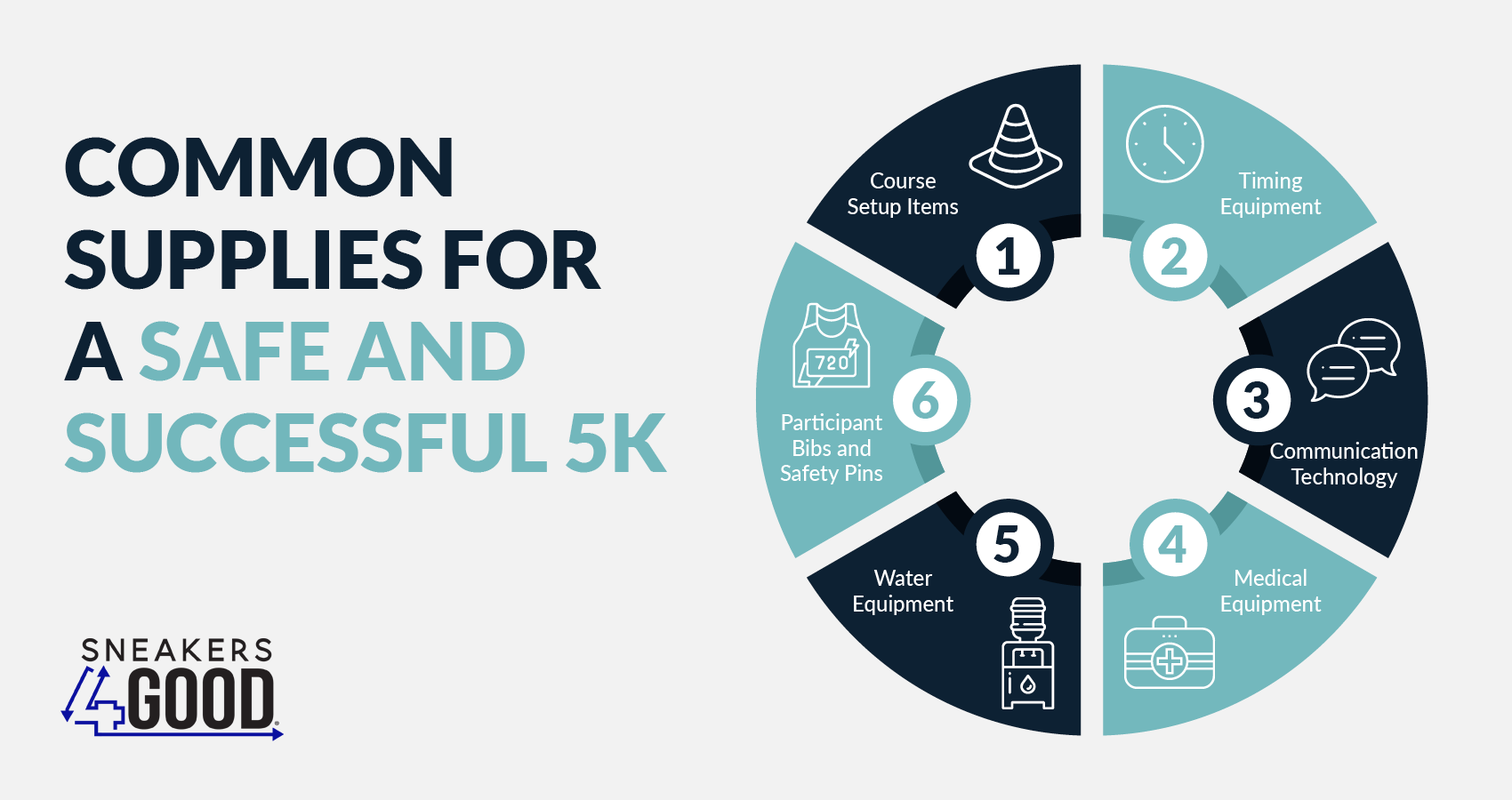
- Course setup items, such as cones, signs, mile markers, and crowd control barriers.
- Timing equipment, such as timing chips, race clocks, and stopwatches.
- Communication technology, such as radios and cell phones.
- Medical equipment, such as first-aid kits and ice packs.
- Water equipment, such as coolers and disposable cups.
- Participant bibs and safety pins, which you’ll pin to runners.
Additionally, you’ll also need supplies to ensure you provide a great experience for attendees, such as:
- Swag, such as t-shirts, water bottles, and more.
- Food and drinks for spectators, such as food trucks and food stands.
- Entertainment equipment, such as speakers for music or a DJ setup.
- Medals and awards as souvenirs for participants.
- Portable restrooms, need we say more?
If you’re hosting your event on behalf of a charitable cause or mission, you may also obtain supplies to help you facilitate increased fundraising. For instance, you might purchase gift baskets to raffle off. You might also work with Sneakers4Good’s sneaker reuse program to earn cash for your cause by giving your gently worn, used and new sneakers a second life!

10. Recruit 5K volunteers.
Most organizations won’t have enough staff to handle all the day-of tasks alone. Luckily, there are plenty of community-minded individuals who would love to help out.
Volunteers can fulfill many roles, such as:
- Event setup
- Course setup
- Parking attendant
- Check-in and registration
- Course marshal
- Water station attendants
- Medical support assistants, if they’re first-aid certified
- Finish line team
- Timing helpers
- Awards ceremony assistant
- Lost and found assistants
- Photographers and videographers
- Cleanup crew
Promote these volunteer opportunities in your 5K materials to maximize visibility and appeal to individuals interested in the running community. Offer thorough onboarding and training and assign tasks based on volunteers’ strengths and interests to ensure everyone is ready to provide a smooth experience on the event day.
11. Run your 5K run!
It’s event day—the culmination of all your work. Arrive early to set up:
- Check-in area
- Running course
- Sponsor and vendor areas
- First aid and water stations
- Parking and traffic areas
Perform necessary equipment checks and ensure your volunteer coordinator has provided volunteers with all the resources they need to help out. After that, all that’s left is to ensure the day goes as smoothly as possible and enjoy the fruits of your work.
This is a great opportunity to get photos and videos for the action to memorialize your 5K event. Plus, you can use these in future marketing materials.
12. Handle post-event tasks.
After a fun and action-packed 5K event, you and your team are probably tired and ready to wind down. But it’s not time to relax yet! Here are a few post-event tasks you should take care of:
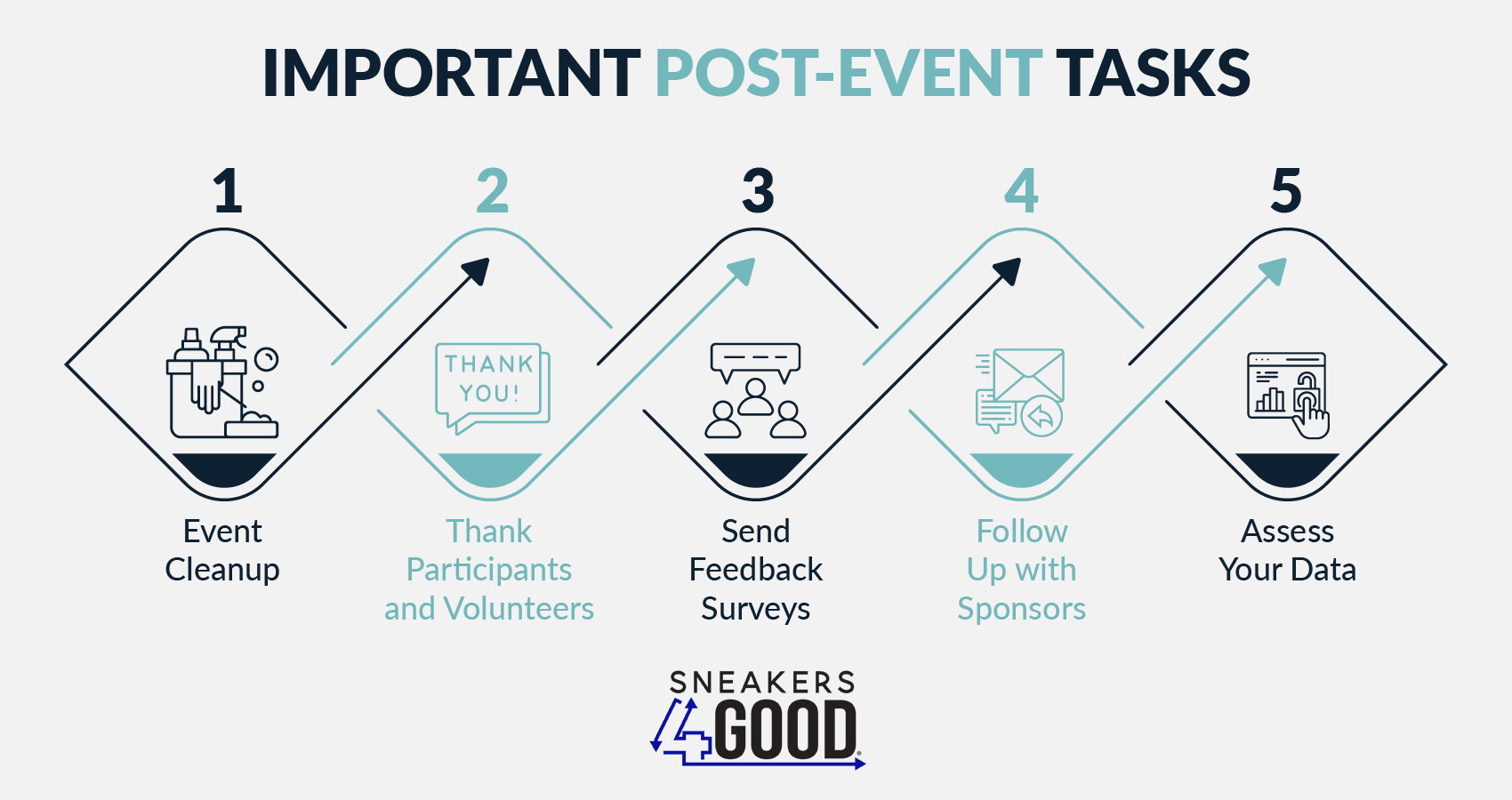
- Event cleanup. Naturally, you need to leave the race course the way it was before your event took place. Clean up your race markers, pick up any trash left behind, and remove your equipment from the area.
- Thank participants and volunteers. While your event is still fresh in everyone’s mind, it’s a great time to strengthen your ties to your community. Thank participants and spectators for attending, and give a special shoutout to volunteers for all their hard work!
- Send feedback surveys. If you intend to host future 5Ks, post-event is a great time to get advice to improve your upcoming events. Email feedback surveys to participants, spectators, and volunteers asking what they enjoyed about your event and what improvements they’d like to see.
- Follow up with sponsors. If your event was sponsored, follow up with sponsors to thank them for their support and discuss how the 5K helped them meet their goals. For example, send them information about the number of people who attended your event to show the increase in brand awareness the company received from the sponsorship.
- Assess your data. Analyze your event data to pinpoint trends and evaluate whether you met your goals. If you did, congratulations! If you didn’t, then you may be able to glean key insights into what you could have done better.
Additionally, it’s also worthwhile to host a little party or celebration for your team! Everyone has worked hard to make your 5K a reality, and you deserve a reward for all your efforts. It doesn’t have to be budget-breaking—a company-paid dinner is an easy, cost-effective option.
Additional Resources
Planning any big event can be daunting. Luckily, it becomes much more manageable when you break it down into smaller pieces. With this guide, you’ll be well-prepared to get your 5K (and your participants) past the finish line!
Interested in learning more about 5Ks and running? Check out these resources:
- How To Start a Running Club. Passionate about running and want to connect with others who feel the same way? Explore how to start a running club here!
- What to Do with Old Running Shoes: 18 Eco-Friendly Ideas. Running is hard on shoes and can lead to a lot of waste. Discover what to do with your old shoes.
- The Circular Economy: How Reusing Sneakers Reduces Waste. Why is it important to reuse sneakers? Learn the answer to this question and more in this guide.