
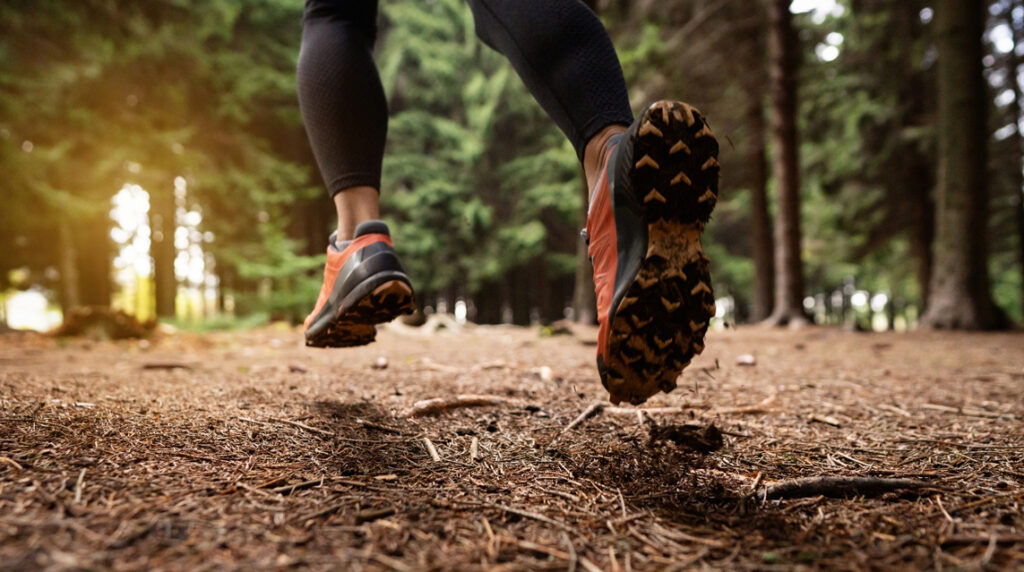

As a cross country runner, have you ever lost a race you wanted to win based on your goals? The chances are you didn’t lose them in the final 200 yards, but in the mud or the slick downhill. You know it’s essential to have the right cross country running shoes that help you achieve your goals without slowing you down. This guide will help you find the right pair of sneakers for your goals, terrain, and budget.
What to Look for in the Best Cross Country Running Shoes
Cross country running isn’t the same as running one of the best marathons. With cross country, unpredictability is baked into the experience: mud patches, steep grassy hills, and tight turns. As a result, the following things are essential for cross country running shoes:
Traction: The grip of cross country shoes is essential. Look for tough outsole lugs, which are the rubber nubs or spike pins at the bottom of the sneakers. Widely spaced lugs are solid for wet terrain, and shorter, denser ones are better for gravel and packed dirt.
Weight: Competitive running shoes ross country often come in under 6 oz, and for even terrain, they should be under 9 oz. Remember that extra weight compounds fast as elevation changes during your run.
Cushioning: Balance is essential here; the better the cushioning, the greater the protection on hard-packed terrain, but it also adds weight. The National Institutes of Health found that minimalist sneakers for cross country runners are better than those with greater cushioning.
Fit: Essential for every runner, and cross country is no exception. If there’s a loose heel, there’s a significant risk of injury. Therefore, make sure you have a secure, snug fit, and consider it non-negotiable.
Durability: Cross country running shoes require just as much durability, if not more, as those for road races. It’s important to ensure that the athletic shoes breathe well and have reinforced toe boxes and heels.
Arch compatibility: An essential aspect of a good fit for any runner is the arch type of an athletic shoe. In fact, it’s a top factor for runners, but many runners don’t know their arch type. Therefore, learn about your arch type (e.g., high, flat, neutral) for a great fit.
Cross Country Spikes vs. Training Shoes: Which Running Shoes for Cross Country Do You Need?
The very short answer to this question is that if you’re a competitive runner and serious about running cross country, you should own both. Here’s why:
Racing Spikes for Race Day Performance
Race day is all about performance, which is why you need cross country running shoes with racing spikes. These kinds of athletic shoes are light, low to the ground, and fitted with small pins (or spikes) that can provide great traction and keep you steady and moving forward. These are great for courses with wet grass or mud. They’re not intended for training on pavement or hard-packed dirt.
Training Flats (a.k.a. Spikeless or Waffle Shoes)
For everyday training, training flats are what you need to own. For running on wet grass or mud, they have rubber lugs instead of pins, which provide greater comfort and durability. They’re great for off-road running and even for races on drier, firmer courses. If you’re on a budget, a quality pair of training flats can double as race shoes for a more relaxed cross-country race.
The 8 Best Cross Country Running Shoes of 2026
Now that we’ve delved into what to look for in your cross country running shoes to make the best investment, let’s explore 8 of the best options for 2026. You’ll see different average price points, terrains, and experience levels.
1. Nike ZoomX Dragonfly XC — Best Overall
Price: ~$160 | Type: Racing Spike | Best For: Competitive high school and collegiate runners
The Nike ZoomX Dragonfly XC is the type of athletic shoe worn when you’re ensuring you maximize every second. The midsole delivers a great energy return, using the same foam from Nike’s marathon super running shoes. There’s more flexibility in the sneakers than in the average XC pair, despite the cushioned stack, which means better feel for the ground and adaptability on uneven terrain. Also, the outsole has great grip on soft turf or muddy courses.
2. Adidas Adizero Avanti XC — Best Performance Value
Price: ~$140 | Type: Racing Spike | Best For: Competitive runners seeking elite performance at a lower price than Nike
This cross country running shoe scores high if you’re looking for a pair intended for aggressive racing. It has a lightweight construction and a spike plate designed to maximize a runner’s push-off on soft ground. It’s a highly credible alternative for runners who seek a proven race-day performer but want to pay less for a very strong competition running shoe. So, when you see it, grab it, as stocks sell out quickly.
3. Nike Zoom Rival XC — Best for Beginners and Youth Athletes
Price: ~$55–65 | Type: Spike (also available spikeless) | Best For: First-time XC athletes, high school freshmen, youth runners
If you’re a beginner or new to cross country running, the Nike Zoom Rival XC should be your athletic shoes. It’s got a protective midsole and a structured upper that provides great support to new runners. It also has a reliable grip. It has two versions, including a spikeless one, which is the Rival Waffle XC, in case you run a race where spikes aren’t permitted. For kids, it’s at a great price point for parents to purchase.
4. Brooks Draft XC — Best for Team Spirit and School Programs
Price: ~$65–70 | Type: Spike and Spikeless versions | Best For: High school teams, club runners, athletes who want customization
One of the best cross country shoes of the year has earned its spot. The Brooks Draft XC features BioMoGo DNA cushioning, providing responsive, adaptive comfort throughout the full distance of a race. Also, what makes this athletic shoe unique is that you can get a customizable heel piece and add school colors, text, or even a mascot to boost team or school spirit. It’s available in spiked and spikeless versions.
5. HOKA Zinal 2 — Best for Dry and Flat Courses
Price: ~$140 | Type: Spikeless Trail | Best For: Adult recreational runners, dry/firm terrain, longer training runs
While technically the Hoka Zinal 2 is a trail running shoe, it belongs on the list because a cross country runner who runs on dry, flat courses or puts in a lot of training miles will appreciate it. It has 3.7mm traction lugs that handle packed dirt and gravel without the need for spikes. It has generous cushioning (29.8mm heel / 22.6mm forefront) to protect runners, and it’s got great breathability.
6. Saucony Kilkenny XC — Best Budget Racing Spike
Price: ~$85 (often on sale under $45) | Type: Racing Spike | Best For: Budget-conscious competitive runners, beginners moving up to race spikes
These running shoes have been a staple at the high school and collegiate level for a while. They have a 4-pin spike configuration which provides solid traction. The SSL EVA midsole provides runners with strong impact protection without the weight of more cushioned options. While it’s a no-frills option, it does what it promises, and it turns out that it’s one of the best values a runner can purchase in its category.
7. On Cloudspike XC — Best for Women Seeking Performance and Comfort
Price: ~$160 | Type: Racing Spike | Best For: Women’s competitive runners, athletes wanting a premium fit
The Cloudspike XC has scored high on RunRepeat’s lab testing. Moreover, it’s earned strong reviews as a cross country running shoe for women. The reason is that it’s a secure, lightweight, and comfortable running shoe for cross-country. It provides a responsive feel, and the spike plate offers a strong grip on soft terrain. For cross country women who run and prefer a mid-priced athletic shoe, this is a compelling choice.
8. Nike Vaporfly 4 — Best for Hard-Packed and Road Sections
Price: ~$260 | Type: Spikeless Road/XC | Best For: Adult competitive runners on courses with significant pavement or hard-packed sections
Not all cross country races or runs take place on mud or grass. For instance, in California, there are substantial paved sections for races where metal spikes are banned. In that case, a cushioned road-capable athletic shoe makes sense. The Nike Vaporfly 4 delivers excellent shock absorption on hard ground, thanks to its 34.1 mm heel stack. While the athletic shoes are at a higher price point, they’re intended for the right course.
How to Choose the Best Running Shoes Based on Your Terrain
Terrain is always a variable for runners, so you can’t underestimate it when buying cross country running shoes. Here’s a quick breakdown of how to choose the right type of athletic shoes for your needs:
Wet grass and mud (typical fall high school courses): Choose racing spikes (4 to 6 pins), metal or ceramic. Longer pins (9mm+) are best for mud, and shorter ones (6mm) for firm grass.
Hard-packed dirt, gravel, and mixed terrain: Spikeless flat or rubber lugs are usually the best. You want to select sneakers that perform well without discomfort from running on spikes.
Courses with paved sections: For races on asphalt, sidewalks, and parking lots, choose cushioned spikeless cross country or road-racing shoes.
Hilly courses: When looking for cross country running shoes for hills, prioritize grip and a secure upper. For downhill, you want stability and lockdown prevention to prevent a sliding foot.
High school vs. collegiate competitions: For high school courses, check with your coach or race in advance. For collegiate courses, lean toward high-performance spikes.
Youth runners and kids: Prioritize fit, comfort, and a manageable spike setup. Also, avoid stiff plates or spikes that are not designed for young athletes with developing bodies and running mechanics.
What to Do with Your Old Running Shoes
Did you know that each year Americans toss more than 300 million pairs of sneakers and shoes into the trash? Unfortunately, most of this footwear, including cross country running shoes, ends up in landfills, where it can take decades to decompose, or even longer. Here’s the thing: the athletic shoes you use for road races and cross country still have value. Moreover, they have more miles and can be used by others.
That’s why so many of the nation’s running store retailers, marathons and other races, and gyms get started with Sneakers4Good. We provide payment for the gently worn, used or new athletic shoes collected by these groups. In turn, we have a global network to get the sneakers into the hands of micro-entrepreneurs who can sell the inventory in their countries and earn a living. And yes, extending the sneakers’ lives is a win for the environment!
Find Your Best Cross Country Running Shoe — Then Pass the Old Ones On
This article on the 8 cross country running shoes of 2026 covered everything you need. We went through cross country shoes for youth to elite competitors. So, the next time you’re looking for cross country sneakers, don’t forget to consider the terrain, cushioning, and weight of the athletic shoes. Remember to know your arch type for the best fit, and when you’re rotating out of sneakers, connect with the team at Sneakers4Good.
© 2026 Sneakers4Good. All Rights Reserved.