
Upcycling and recycling are two methods of reuse critical to living a sustainable life. But what does it mean to upcycle vs recycle? And perhaps most importantly, what’s the true impact when you upcycle and recycle?
What is Recycling?
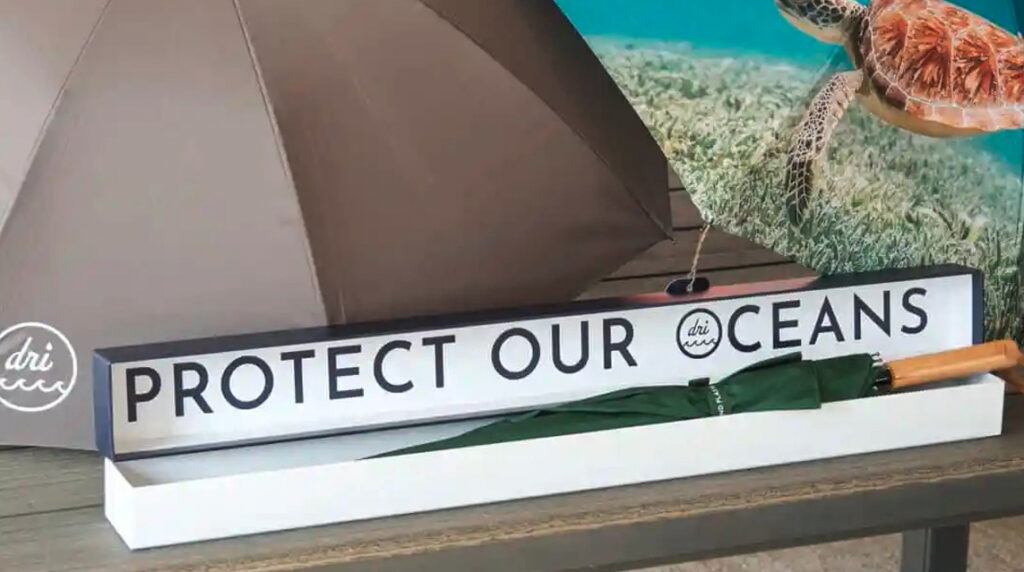
Recycling is the method of gathering, processing, and reusing materials that would otherwise be considered waste to throw “away.” Recycling takes an existing product that’s headed for a landfill and instead turns it into a new product that’s utilized for other purposes. For example, Dri umbrellas are created via a mechanical recycling process that turns discard ocean-bound PET (mostly plastic bottles) into plastic flakes, then extrudes the flakes into polyester yarn and polyester fabric. The polyester fabric is sewn on top of an umbrella frame and poof! a Dri umbrella is born.
What is Upcycling?
Upcycling is the process of taking an existing material or product and either reusing the product as is, or turning it into another product without mechanically altering it. This is what brands like Sneakers4Good do – they take gently used sneakers from existing shoe owners, collect them, and distribute the shoes to micro-entrepreneurs who use them to build businesses. Sneakers4Good doesn’t mechanically alter the shoes but upcycle the product to give them a second life. You’ve upcycled too – like when you turned that cute pair of jeans into shorts when bell bottoms went out of style in the early 2000’s, or when you used an old t-shirt as a rag to clean up a kitchen leak.
So why are upcycling and recycling so important? When you extend the life span of a product through either method, it reduces the need to create new items, which saves energy, cuts emissions, and decreases waste. Instead of living in a disposable world where we’re constantly creating landfill-bound commodities, upcycling and recycling help us keep existing items in use for as long as possible.
Reuse in any form has many important benefits to our planet, two of the most powerful being that they conserve landfill space and lower carbon emissions.
Reuse & Landfill Space
When we use the term “throw away”, what we’re actually saying is, “thrown in a landfill”. Landfills are designated areas where our garbage and waste is put or buried. They provide a congregated area to ensure our waste doesn’t infiltrate our yards, neighborhoods and living environment. While they are helpful, landfills are now overflowing given the sheer volume of waste we create every year. The products release toxics such as carbon dioxide, methane and other greenhouse gases into the air and ground as they break down. These toxics have very harmful impacts on planets, animals, and humans. Many of these landfills are massive – extending for miles and miles. The biggest landfill in the world, Apex Regional Landfill in Nevada, spans 2,200 acres, holds roughly 50 million tonnes of waste, and receives about 10,000 more tons daily.
If we aren’t recycling or upcycling items, the material ends up either in a landfill or our oceans. Given the millions of pounds of plastic that enter our oceans every year, it’s fair to say we’re using the oceans as just another landfill.
Over 1.1 billion rain umbrellas end up in landfills every year due to their typically weak infrastructure of cheap aluminum, fiberglass, and nylon. That’s why it’s so critical to us that Dri umbrellas are strong and built to last. We don’t want our umbrellas to contribute to that body count!
Reuse & Carbon Emissions
Manufacturing new products requires raw materials, energy, and water — all of which contribute to greenhouse gas emissions. The same greenhouse gases that contribute to global warming. Which contributes to climate change. That contributes to…well, you get the picture. But by repurposing what already exists, we cut emissions at every stage.
- No extraction of raw materials.
- Lower expenditure of energy, if any at all!
- Avoid additional water usage, our most precious (and limited!) resource.
- Slow landfill expansion (and the toxins released within them.)
Win, win, win, win, right?!
It’s eye-opening to know the difference between upcycle vs recycle.
So, before you toss the next piece of clothing or furniture away, ask yourself:
- How can I extend the life of this item?
- Can I paint it?
- Patch it?
- Donate it?
- Use it to hold my gardening tools or cleaning supplies?
- Use it as a cleaning supply?
- In short, what can you do to upcycle and recycle?
Knowing upcycling vs recycling gives you great knowledge and power. When you recycle and upcycle, you’re acting creatively, thoughtfully, and with our shared Earth in mind. And undoubtedly, as you continue your reuse journey, you’ll encourage and inspire others to do the same.
 Guest Post:
Deirdre H. Bird, Founder & CEO, Dri. Dri Umbrellas is fighting the ocean plastic pollution crisis by building eco-friendly, durable rain umbrellas from recycled ocean-bound plastic. These high-quality umbrellas are built to protect our oceans and keep you dry.
© 2025 Sneakers4Good. All Rights Reserved.