
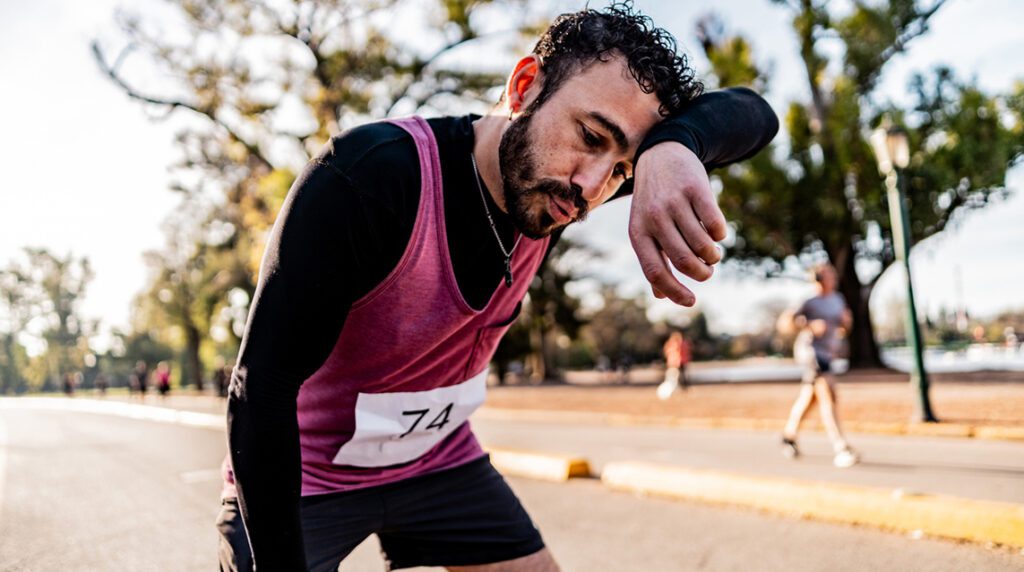

Sweltering heat poses a barrier for even the most seasoned runners. The combination of the hot sun, the heavy air, and the scorching-hot pavement can make a run feel less than enticing.
Though running in the heat is a challenge, taking a few extra steps to prepare for a run in the sun can mean the difference between a runner’s high and heatstroke. In this article, we’ll provide an overview of the science behind the difficulty of summer runs, the health risks that you should be aware of, and tips for staying cool in the heat.
Why Is Running in the Heat So Hard?
In short, running in the heat is difficult because your body has to work harder to cool itself down.
Your body produces perspiration (sweat) when it experiences heat. As the sweat evaporates, it cools your body down. Unfortunately, summer humidity makes sweat evaporate more slowly, which in turn makes perspiration less effective. As a result, your body experiences symptoms of exhaustion, including:
- Increased heart rate
- Additional perspiration (sweat)
- Faster dehydration
- More fatigue
If your body gets too hot, it can experience heat-related illnesses, including heat stroke. Heat stroke occurs when the body can no longer control its temperature, and can lead to permanent disability or death if not appropriately treated.
Are There Any Benefits to Running in the Heat?
Yes, but only when done safely! Though running in the heat has some risks, there are also some potential benefits, including:
- Improved heat tolerance
- Better sweat efficiency
- Increased running abilities in warmer climates
- Increased mental resilience
It is important to remember that any benefits to running in the heat develop gradually over time, and should never come at the expense of safety or health.
7 Tips for Running in the Heat Like a Pro
Ready to tackle the challenge of running in the heat? Take the following precautions to ensure your safety.
1. Watch the Weather Before You Head Out
When you’re planning to run in the heat, you should always check both the temperature and the humidity. Some other things that you should keep an eye on are:
- Heat Index
- Air Quality (especially during wildfire season)
- Weather Alerts
2. Run During the Coolest Parts of the Day
The coolest times of day in the summer months are early morning and evenings, while the sun is not out. This makes them ideal times for running, especially on days that are forecasted to be especially hot.
Regardless of when you run on hot days, you should avoid the hottest hours. These typically run from late-morning through the afternoon.
3. Dress Appropriately
Always opt for lightweight, lightly colored, moisture-wicking fabrics when you’re planning to run in the heat. Also, consider wearing breathable hats and sunglasses with UV protection.
Pro Tip: Avoid heavy, dark-colored cotton, which traps sweat and attracts heat.
4. Stay Hydrated Before, During, and After Your Run
Don’t wait to drink until you’re thirsty. Instead, make sure that you drink fluids throughout the day, both before and after your run. If you’re going on a longer run, you should consider carrying water so you can rehydrate on the go.
Pro Tip: Consider incorporating electrolytes into your hydration routine! Carry them along with you in packet form, or drink them after your run for rehydration and recovery.
5. Protect Yourself from the Sun
Sunburns are no fun! Make sure that you apply broad-spectrum sunscreen before you head out for your run, and reapply periodically if you’re running for an extended period. Consider wearing Ultraviolet Protection Factor (UPF) clothing for added protection.
Pro Tip: Don’t miss the small spots! Make sure that you apply sunscreen to all exposed areas of your body, including your ears, neck, and ankles.
6. Listen to Your Body
This one may seem obvious, but it’s incredibly important to slow your pace and know your limits in the heat. Take walking breaks if needed throughout the run, and give yourself grace if your pace is slower than normal.
Pro Tip: During the summer, consider using effort as your guide rather than pace.
7. Know the Signs of Heat Illness
Knowing the signs of heat illnesses can be life-saving.
The symptoms of heat exhaustion include:
- Profuse sweating
- Dizziness
- Nausea
- Bodily weakness
The emergency signs of heat stroke include:
- Confusion
- Hot skin or excessive sweating
- Loss of consciousness
- Extremely high body temperature
If signs of heat illnesses appear, you should stop running immediately and seek medical attention.
Choosing the Right Shoes for Running in Hot Weather
Though wearing the right shoes can’t lower the temperature, they can surely improve comfort (and performance). When you’re looking for shoes for summer running, you should keep an eye out for the following features:
- Breathable mesh uppers
- Lightweight construction
- Moisture-wicking liners
- Overall breathability/ventilation
Pro Tip: If you run frequently during the summer, you should rotate your shoes so that you give each pair the time to dry completely.
Give Gently Worn Running Shoes You Don’t Need a Second Life with Sneakers4Good
Summer training means putting additional miles on your running shoes. Even the best running shoes wear down, especially if you’re running during the hottest time of year. Running with worn-down shoes can be a safety risk; once your running shoes lose cushioning or support, it’s time to replace them.
Once it’s time for a new pair, you don’t have to send the used ones to the landfill. Sneakers4Good’s mail-in reuse bag program makes it easy to give your gently worn, used, and new running shoes a new chance at life! The process can be broken into four simple steps:
- Order a free collection bag from Sneakers4Good’s website
- Choose a charitable organization to support with your donation
- Fill it with 6-8 pairs of your athletic shoes
- Ship it back!
It’s that easy! With Sneakers4Good, you not only get to clear your closet, but also keep your athletic shoes out of landfills. Plus, you get to support a charitable organization of your choice! It’s a win-win!
Run Smart and Stay Cool
The summer heat doesn’t have to ruin your runs! Running in hot weather is more than possible if you take the right steps to prepare. Consider prioritizing consistency over speed during the summer months. Listen to your body; it’s more than okay to slow down!
If summer training starts to wear down a pair of your favorite running shoes, don’t toss them in the trash! Donating them through Sneakers4Good’s mail-in bag program can extend their life, reduce landfill waste, and clear your cluttered closet.
Looking to give your retired running shoes a second life? Get started here.
© 2026 Sneakers4Good. All Rights Reserved.