


Corporate social responsibility isn’t just a trendy buzzword. It’s quickly becoming a baseline expectation for modern businesses.
For retailers, especially in the running and footwear space, customers are paying closer attention to how and where products are made, how companies treat their communities, and what happens after a product’s lifecycle ends.
In fact, research from McKinsey & Company shows that consumers increasingly factor sustainability into purchasing decisions, and many are willing to spend more on brands that align with their values.
So, what does corporate social responsibility (CSR) actually look like in retail? And how can athletic shoe stores and specialty running retailers build meaningful programs without overcomplicating things?
This guide breaks it all down.
So, what does corporate social responsibility (CSR) actually look like in retail? And how can athletic shoe stores and specialty running retailers build meaningful programs without overcomplicating things?
This guide breaks it all down.
So what is corporate social responsibility, and why is it important?
Corporate social responsibility (CSR) refers to a company’s commitment to operating in ways that are socially, ethically, and environmentally responsible.
This can include everything from reducing environmental impact to supporting local communities, improving labor practices, or giving back through charitable initiatives. CSR helps businesses create value beyond profits, while also strengthening their brand, relationships, and long-term success.
For many modern companies, CSR is more than a “nice to have.” It’s part of how customers, employees, and investors evaluate a business.
You’ll often hear CSR mentioned alongside ESG (Environmental, Social, and Governance). While they’re related, they’re not exactly the same.
Think of CSR as the strategy and initiatives, and ESG as the scorecard.
For most retailers, CSR is a more practical starting point. It’s where you define your values and take action in ways that make sense for your business.
Corporate social responsibility isn’t one-dimensional, so not all CSR looks the same between companies. Most retailers engage in several types at once, often without labeling them as such. These efforts typically fall into four core categories: ethical, environmental, financial, and philanthropic.
Understanding each of these helps you identify where your business already contributes and where you can build a more intentional CSR strategy.
Ethical responsibility focuses on how your business operates day-to-day. This includes fair labor practices, responsible sourcing, and transparent communication with customers.
For retailers, it can mean choosing reputable suppliers, maintaining honest pricing, and clearly communicating policies. These decisions build trust and strengthen your brand over time.
Environmental CSR centers on sustainability and reducing your company’s impact on the planet.
In retail, this often includes cutting down on packaging waste, offering sustainable products, or keeping items out of landfills. For footwear retailers, programs like sneaker reuse or recycling are practical ways to address waste while engaging customers.
The financial aspect of CSR refers to how companies allocate resources responsibly, balancing profitability with ethical and social priorities.
This might include investing in sustainable initiatives, supporting local economies, or allocating funds to community programs. The goal is to align financial decisions with long-term value, not just short-term profit.
Philanthropy is what most people think of first when they hear CSR: giving back.
For retailers, this often includes donations, fundraising events, or partnerships with nonprofits. These efforts are typically easy to implement and can be scaled over time, making them a strong entry point for building a CSR program.
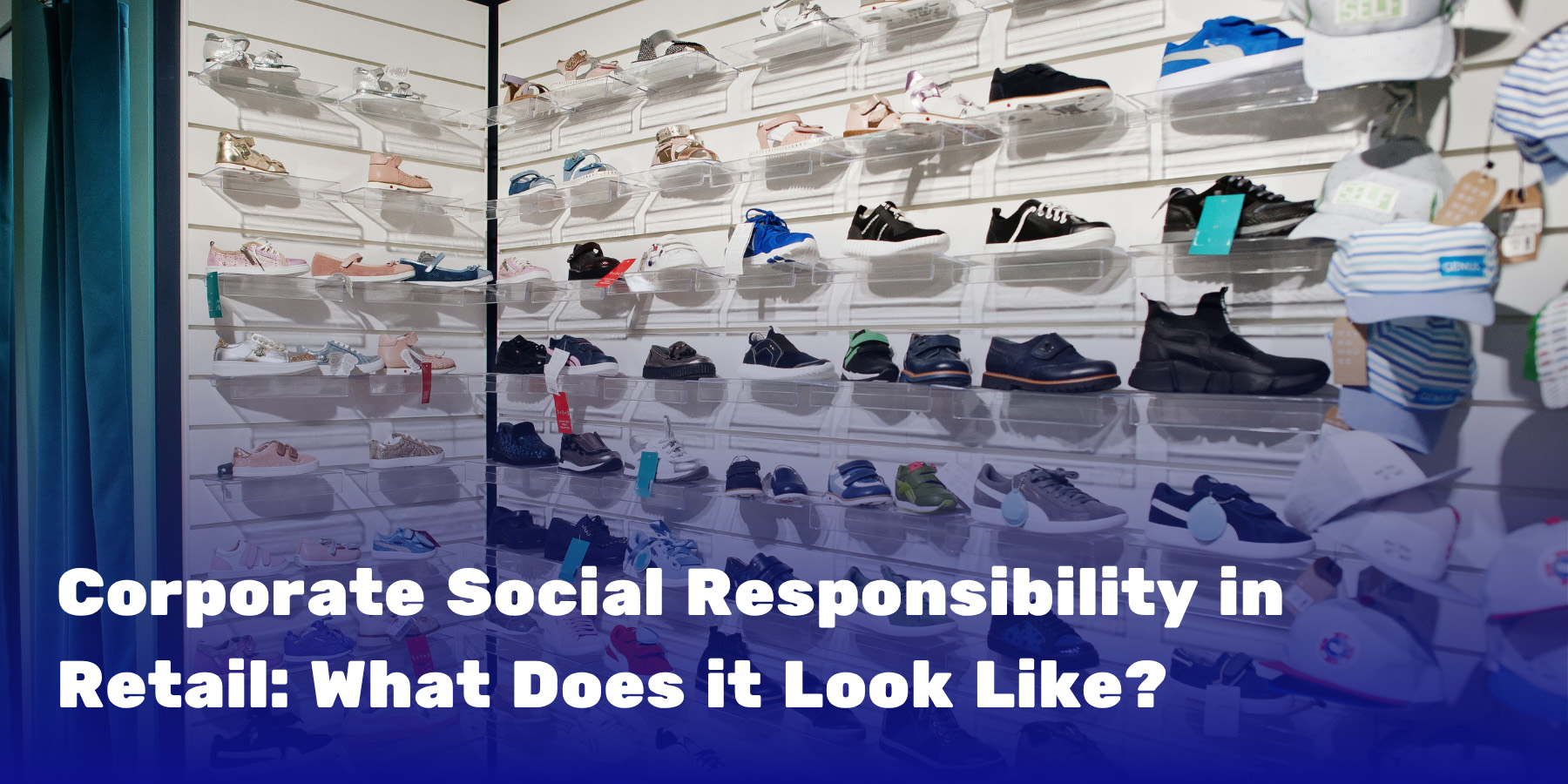
CSR in retail doesn’t have to mean launching a massive foundation or overhauling your entire business model. In reality, the most effective retail corporate social responsibility strategies are practical, repeatable, and aligned with your brand.
For example, a store that specializes in running gear might:
The key is to integrate CSR into what you’re already doing.
Retailers are uniquely set up to make a real impact because they interact directly with customers and communities every day. Even small, consistent efforts, like collecting gently used running shoes or hosting a quarterly giveback event, can add up to meaningful change over time.
When done right, corporate social responsibility isn’t just good for communities and social causes. It’s good for business, too! Here are some of the most compelling benefits of CSR for retailers:
In short, CSR helps you build a business that people want to support, whether they’re customers, employees, or partners.
Launching a CSR program might sound overwhelming, but it doesn’t have to be. Here’s a step-by-step approach you can use to build a strategy that works for your store.
Start by asking: What do we care about?
Your CSR efforts should reflect your brand’s values and your community. For example, running retailers might focus on health, wellness, or sustainability.
Decide what success looks like for your brand. Do you want to reduce waste, raise funds for a specific cause, or increase community engagement? The options are nearly endless, so it’s important to hone in on what matters most to you.
Clear goals help you stay focused and gauge your impact.
Your employees and customers are valuable sources of insight. Find out what causes matter to them and what kind of events they would participate in.
This helps ensure that your CSR activities really resonate with your community.
Focus on initiatives that are easy to implement, scalable, and relevant to your business.
The goal is to choose activities that fit naturally into your existing operations, not ones that require a complete overhaul.
For example, a simple in-store initiative like a sneaker reuse program can run continuously with minimal lift, while still delivering measurable impact for both your business and your community.
You don’t have to do everything alone.
Partnering with organizations like Sneakers4Good can simplify the process while increasing your impact.
Track your goals, efforts, and outcomes, and be sure to share them with your audience. This is where your CSR initiatives can overlap with your marketing strategies!
Whether it’s measured in pairs of running shoes collected or dollars raised, showing results builds credibility and encourages continued participation. It shows your customers that you care, and reminds them that you’re putting in the time to make a difference.
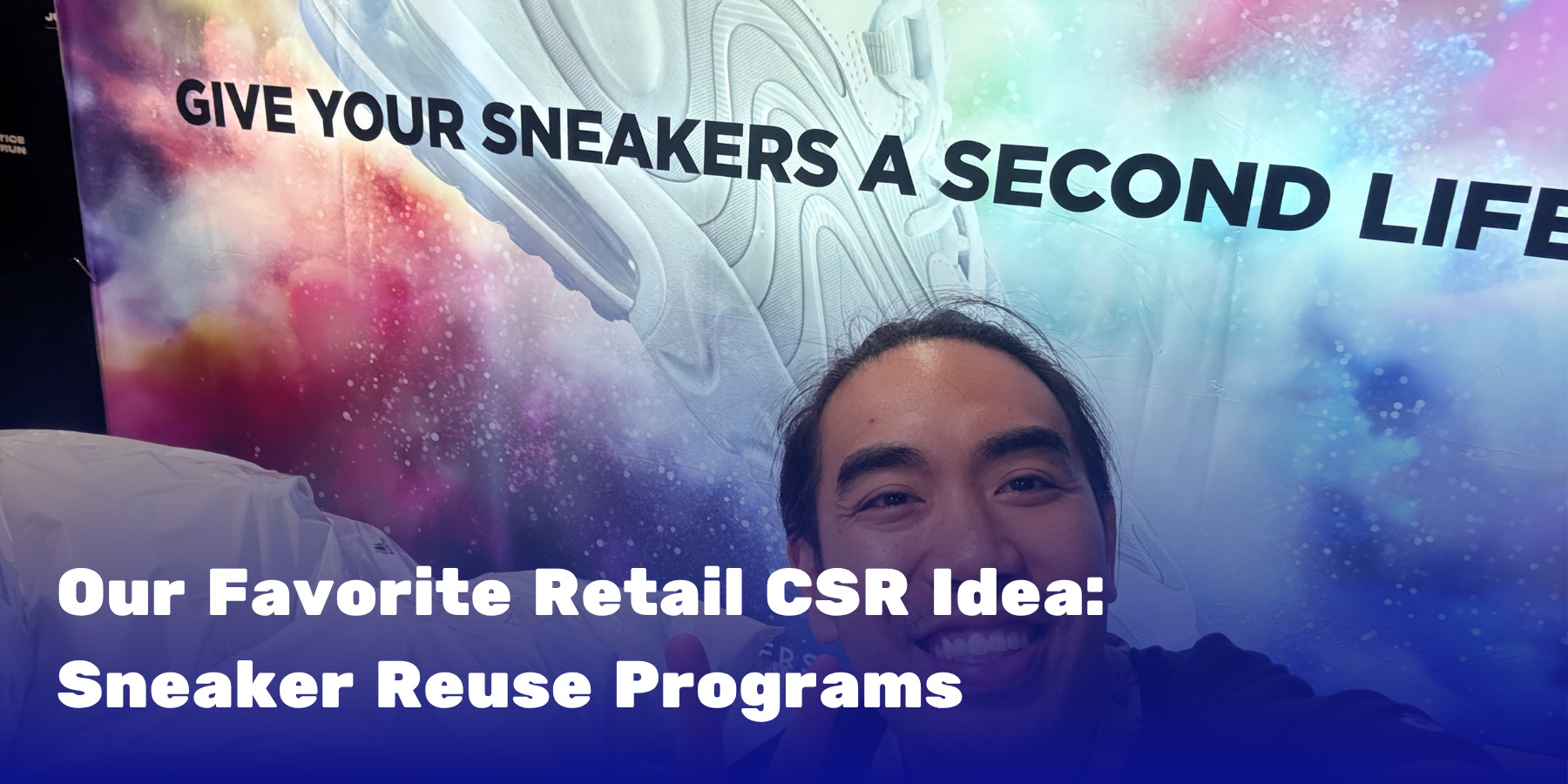
If you’re looking for a CSR initiative that checks all the boxes (simple, impactful, and scalable), sneaker reuse programs are hard to beat.
Retailers collect gently worn, used and new running shoes from customers and the community. These shoes are then redistributed, repurposed, or used to support fundraising efforts.
With a partner like Sneakers4Good, the process is streamlined:
Sneaker reuse programs support multiple types of corporate social responsibility at once:
Even better, it doesn’t have to be a one-time event. Sneaker collection drives can become an ongoing CSR activity that you build into your business year-round.
Looking at how established brands operate can help spark ideas for your own CSR strategy. Here are a few big names you already know and some of the ways they put social responsibility values into practice.
Nike has played a major role in shaping corporate social responsibility in the retail and footwear industry. The company’s sustainability efforts include the use of recycled and lower-impact materials, investments in circular design, and long-term goals to reduce its carbon footprint across operations and supply chains.
A key example is Nike Grind, a program that repurposes manufacturing scrap and worn-out shoes into materials used in new products and athletic surfaces.
Overall, Nike’s CSR strategy emphasizes innovation and circularity, with a focus on extending product lifecycles and reducing waste.
Brooks Running focuses its corporate social responsibility efforts on both environmental impact and community engagement. The company has set climate-related goals that include reducing emissions across its operations and improving sustainability in product design and materials.
Along with its environmental initiatives, Brooks invests heavily in running communities through partnerships, events, and charitable support. The brand also highlights progress toward its sustainability and social impact goals as part of its broader transparency efforts.
TOMS Shoes is one of the most recognizable examples of corporate social responsibility in the footwear industry. The brand originally built its identity around the “One for One” model, where each purchase meant another pair of shoes was donated to a child in need.
Today, TOMS operates a more flexible impact model that includes funding nonprofit partners and supporting initiatives focused on mental health, education, and community development.
Still have questions about CSR in the retail world? Here’s what you need to know.
Corporate social responsibility in retail refers to the actions retailers take to operate ethically, sustainably, and in ways that benefit society while still running a successful business.
These are among the most common CSR activities:
Simple, high-impact options for small retailers include:
A sneaker reuse program supports corporate social responsibility by reducing waste and supporting community impact at the same time. Collecting gently worn athletic shoes helps keep footwear out of landfills, aligning with environmental goals.
These programs can also generate funds for nonprofits or local initiatives. Because they’re easy for customers to participate in, they drive ongoing community engagement.
Corporate social responsibility doesn’t have to be complicated to be effective.
For retailers, especially in the footwear and run specialty space, the best CSR programs are the ones that fit naturally into your business, resonate with your customers, and are sustainable over time.
That’s where sneaker reuse programs really stand out.
By partnering with Sneakers4Good, you can:
If you’re ready to take the first step, a sneaker reuse program is one of the simplest, most impactful ways to start building your CSR portfolio today! Learn how to get started with Sneakers4Good and turn your business into something even bigger.
© 2026 Sneakers4Good. All Rights Reserved.

Interested in learning more about recycling sneakers? Check out these resources:
"*" indicates required fields